Ercole Barovier (Murano, 1889 – Venice, 1974)
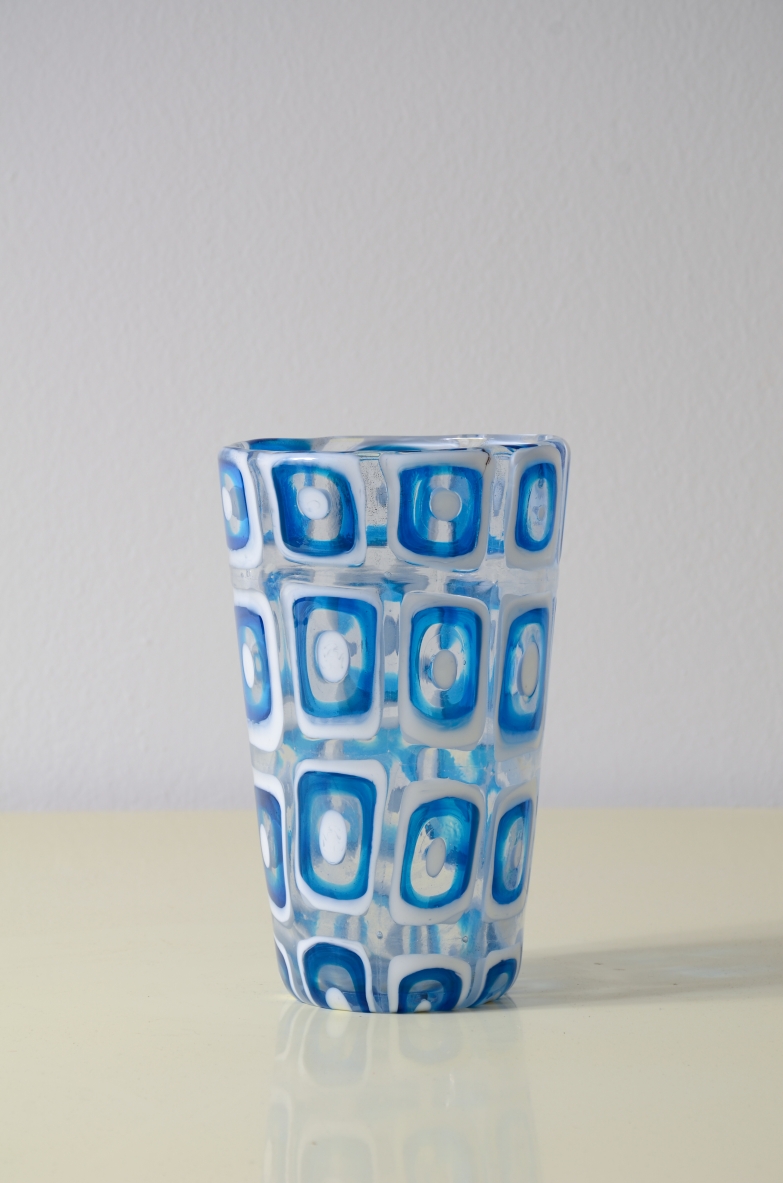
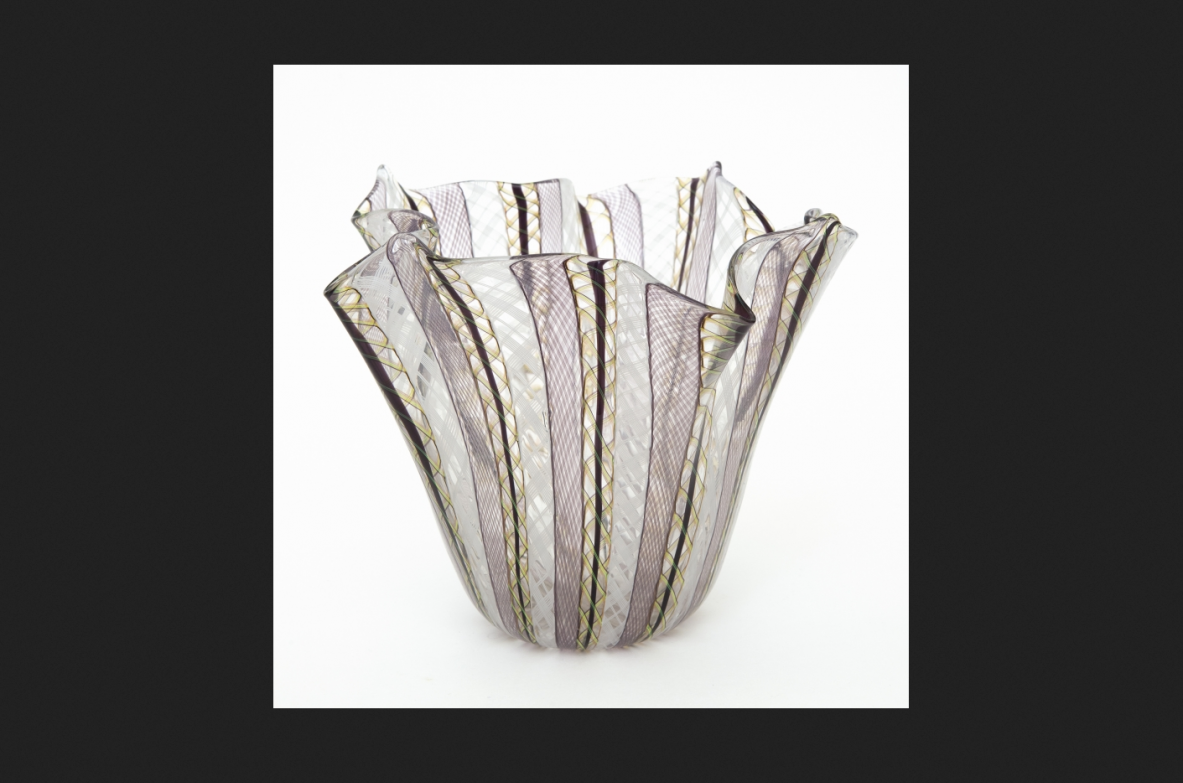
Vase from the *Dorico* series, *Dorico-Acquamare* variant, featuring decoration with large square *murrine* in *lattimo* (opaque white glass) and blue. Designed by Ercole Barovier and first presented at the 30th Venice Biennale in 1960.
Manufactured by Barovier & Toso, Murano, 1960.
One of the most important master glassmakers of the 20th century, Ercole Barovier took over the artistic direction of the family glassworks in 1926, playing a pivotal role in the renewal of Murano glass. His extraordinary capacity for experimentation led him to develop innovative techniques and create works of great formal and chromatic refinement. Honored at numerous international exhibitions, he was celebrated with a retrospective at the Venice Biennale in 1976.
Angelo Biancini (Castel Bolognese, 1911–1988)
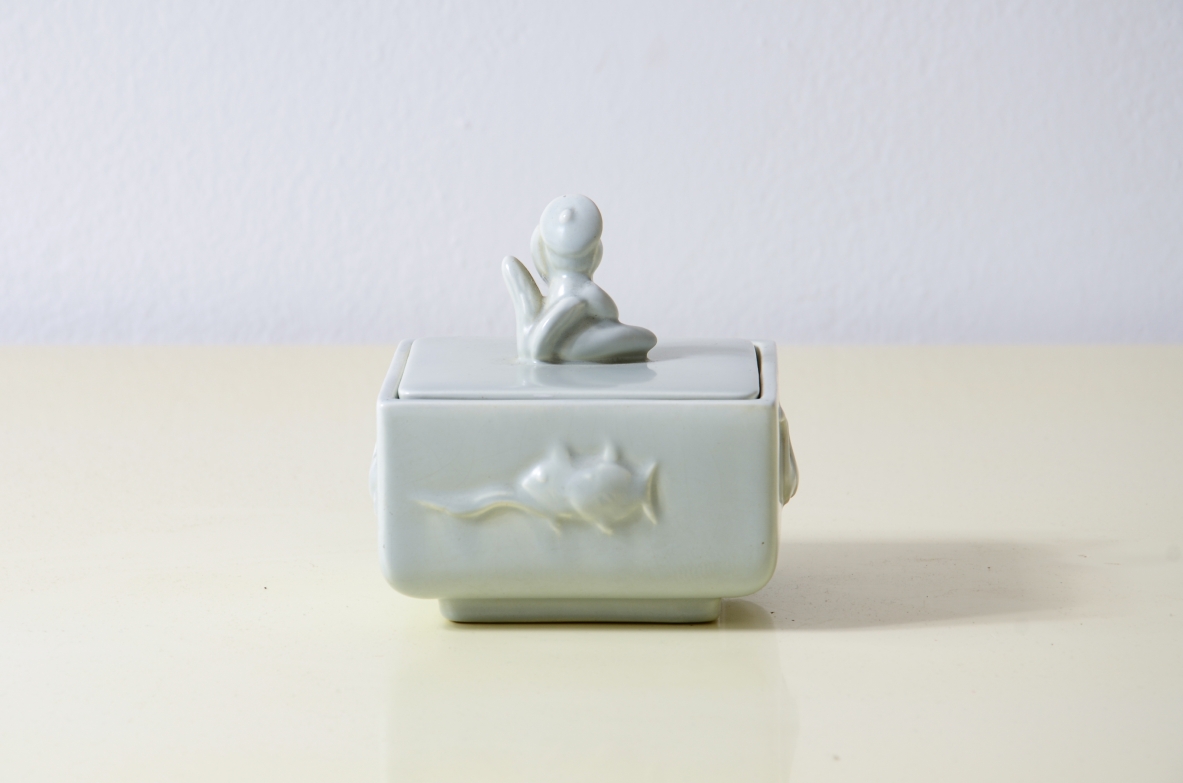
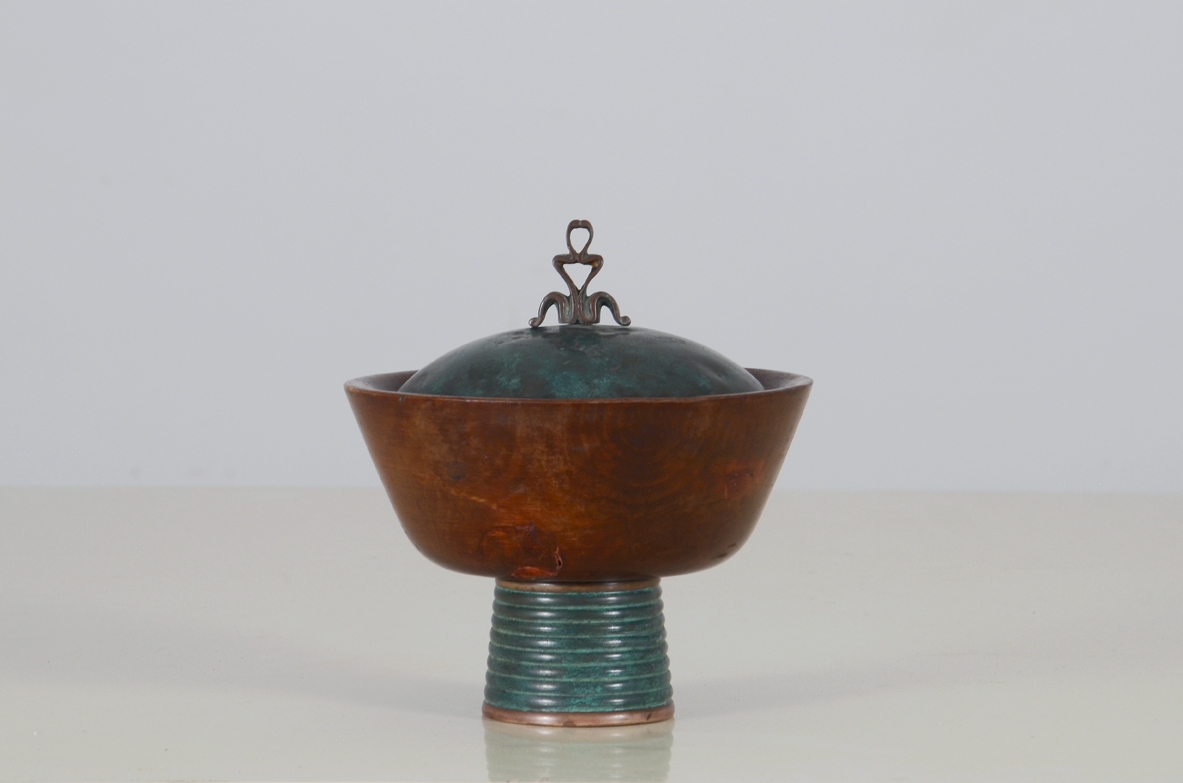
Elegant ceramic box with lid featuring marine-themed decoration.
Laveno manufactory, c. 1930.
One of the most important Italian sculptors and ceramicists of the 20th century, Angelo Biancini trained in Florence under the guidance of Libero Andreotti. The creator of numerous monumental works in Italy and abroad, he is distinguished by the expressive power and sculptural sensitivity of his work. He participated in prestigious exhibitions—including the Venice Biennale, the Rome Quadriennale, and the Milan Triennale—earning numerous international accolades. From 1937 to 1940, he collaborated with Guido Andlovitz on the artistic direction of the Società Ceramica Italiana in Laveno. In 1973, a dedicated gallery was opened in his honor at the Vatican Museums.
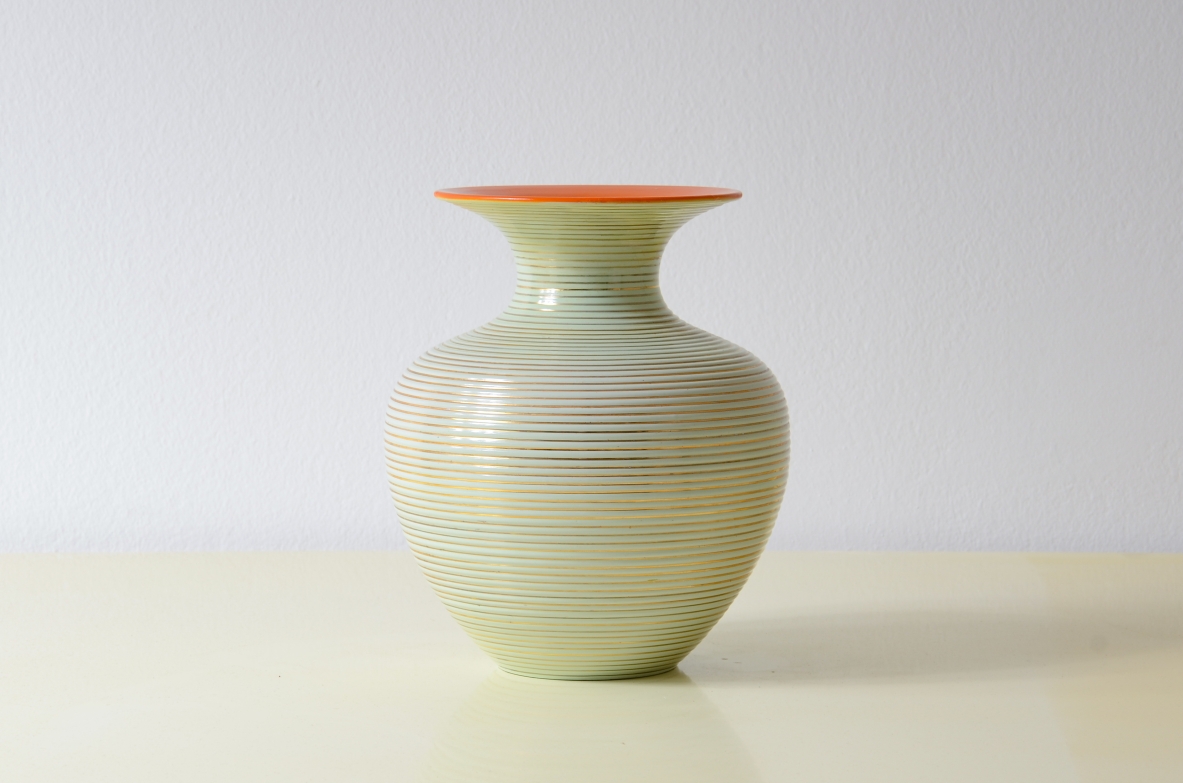
Wheel-thrown glazed ceramic vase.
Rometti Manufactory, Umbertide, c. 1930.
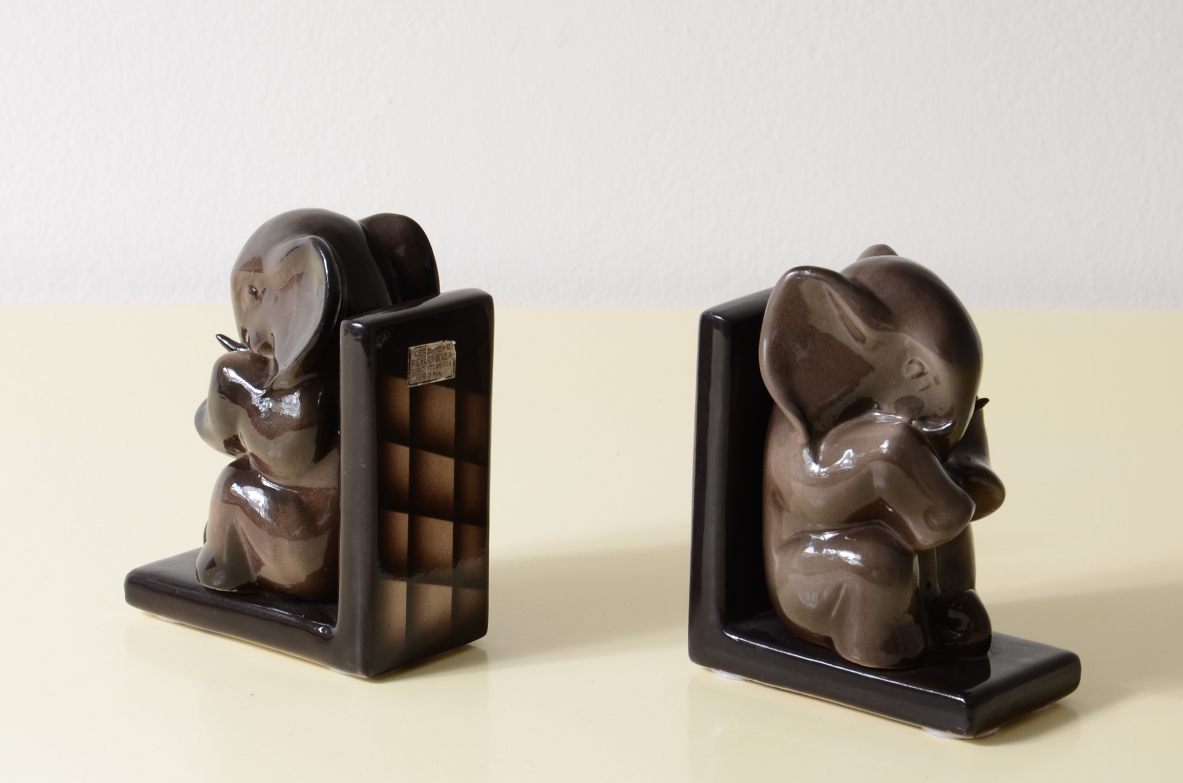
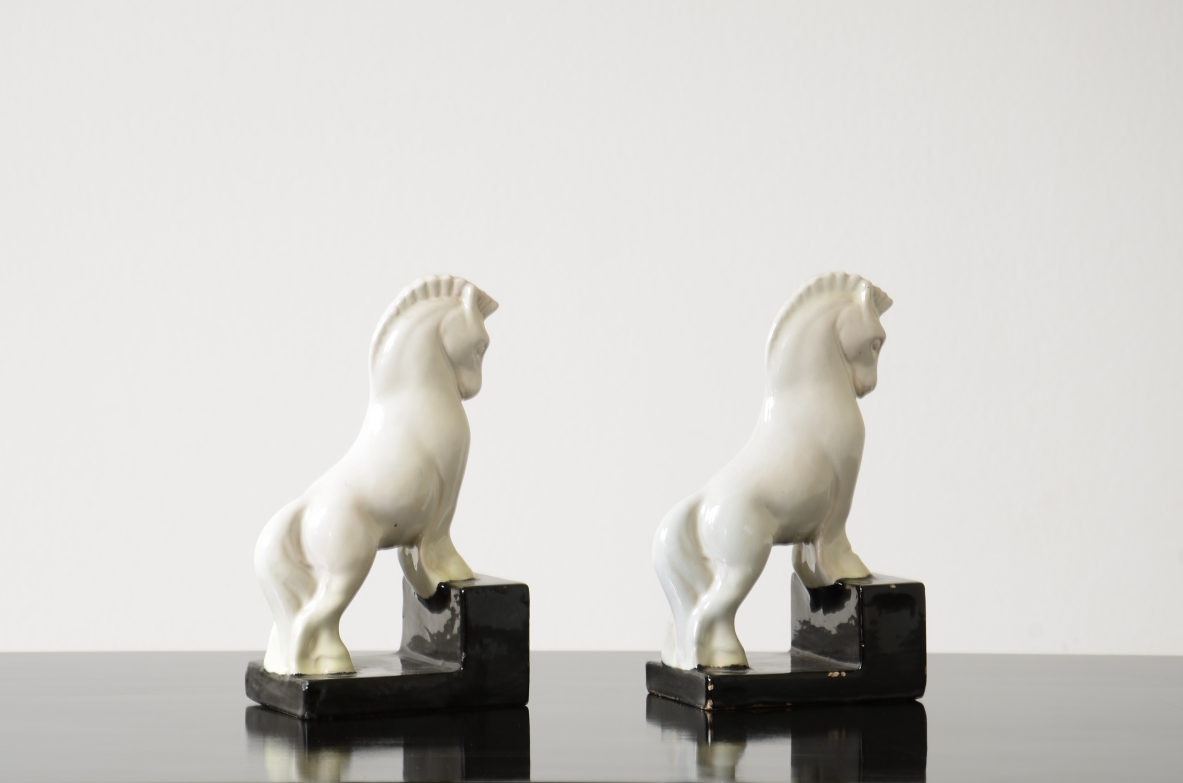
Rare pair of small glazed ceramic sculptures serving as bookends.
Richard Ginori manufactory, circa 1930.
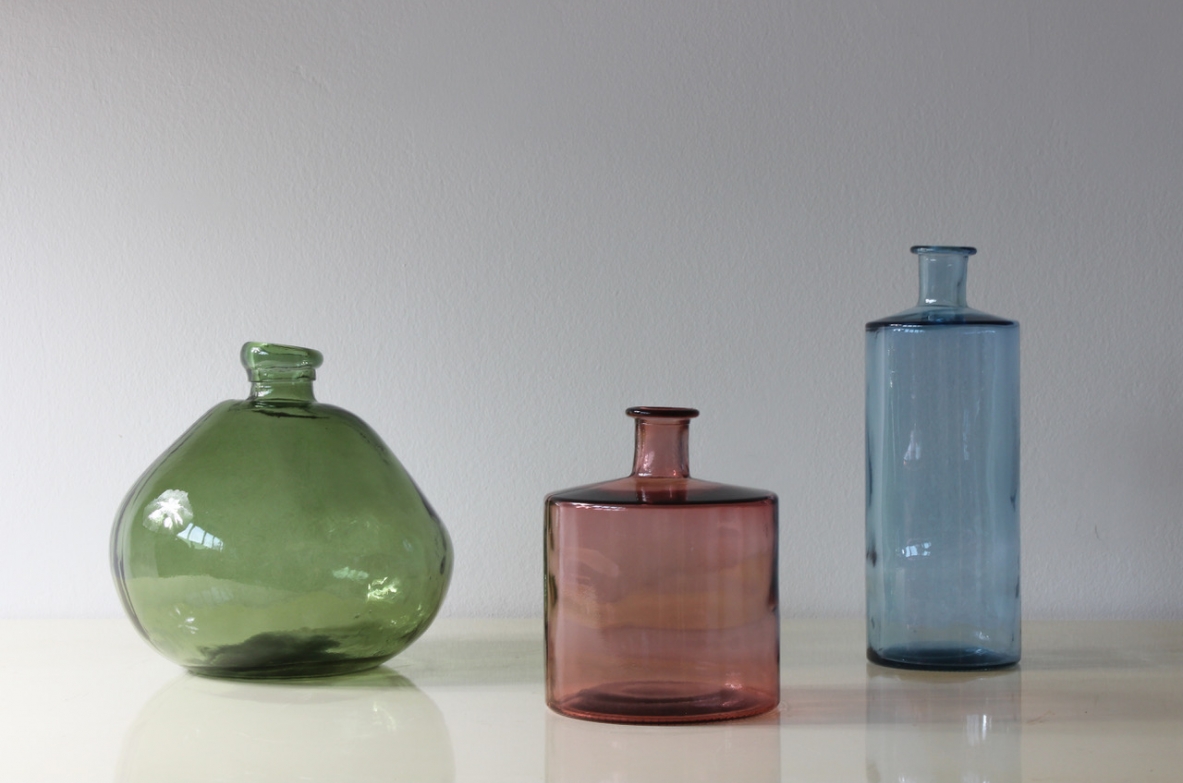
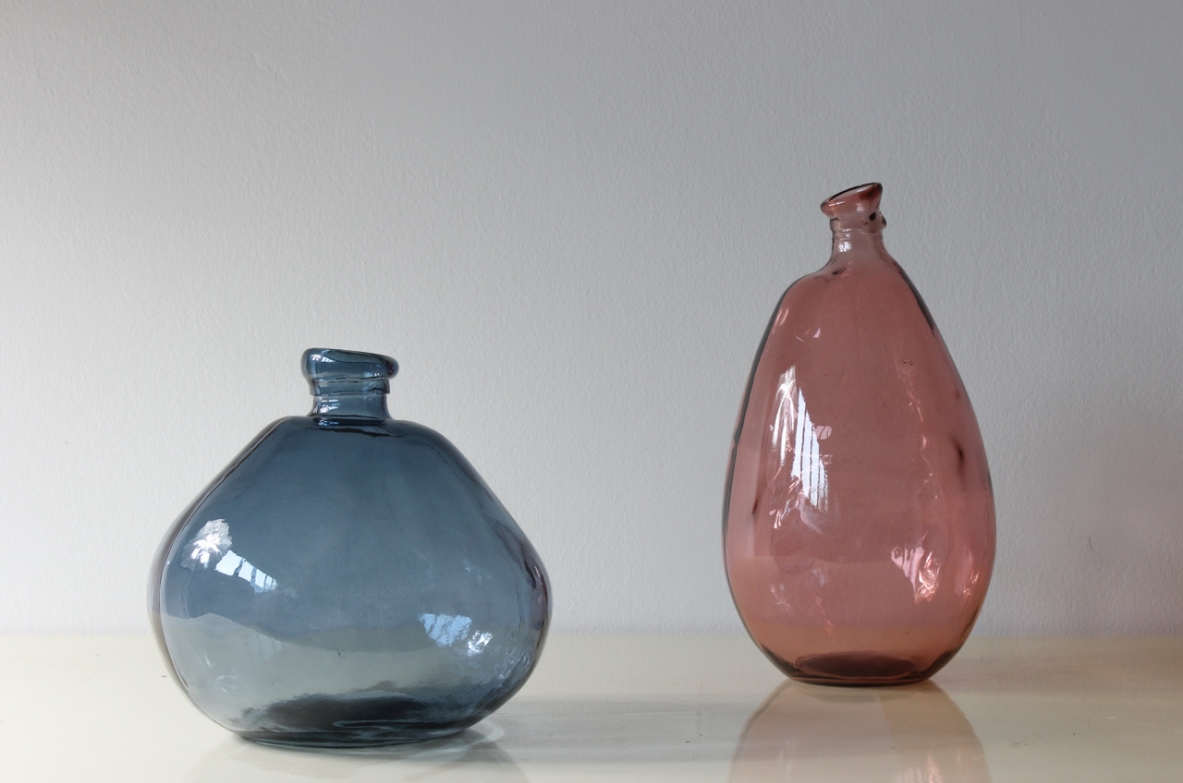
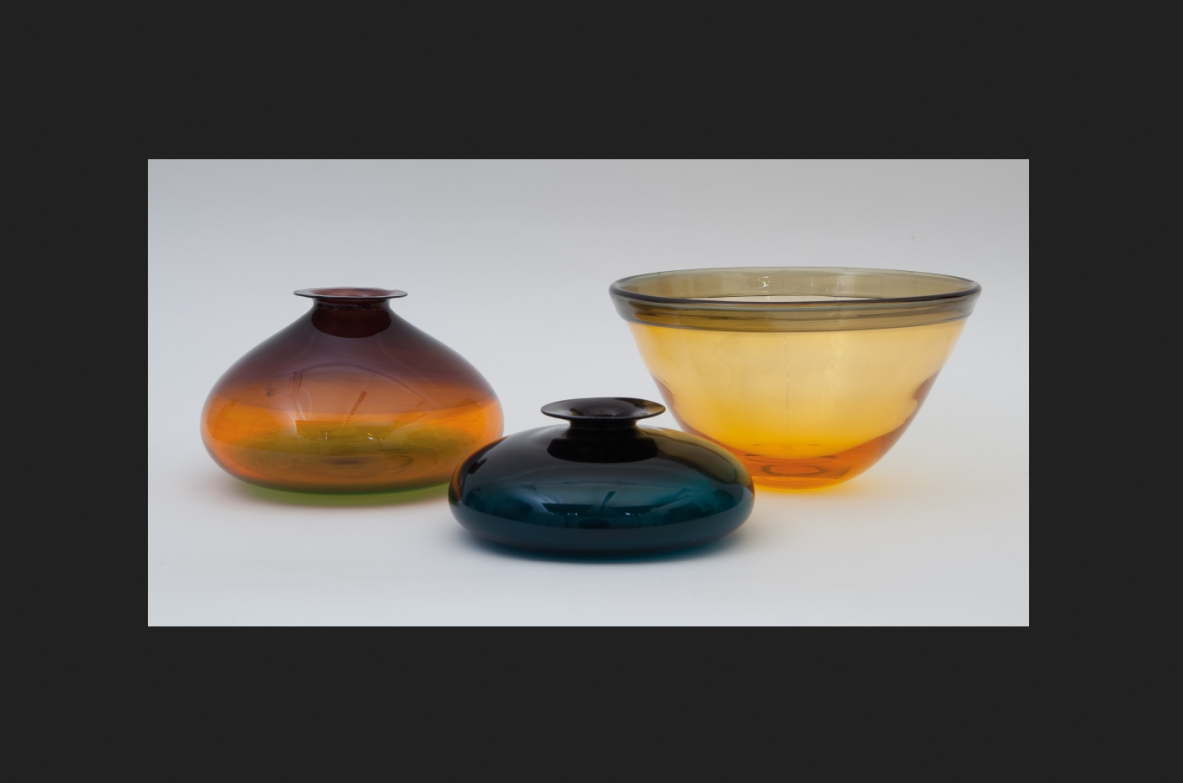
Two large blown glass vases.
21st-century craftsmanship.
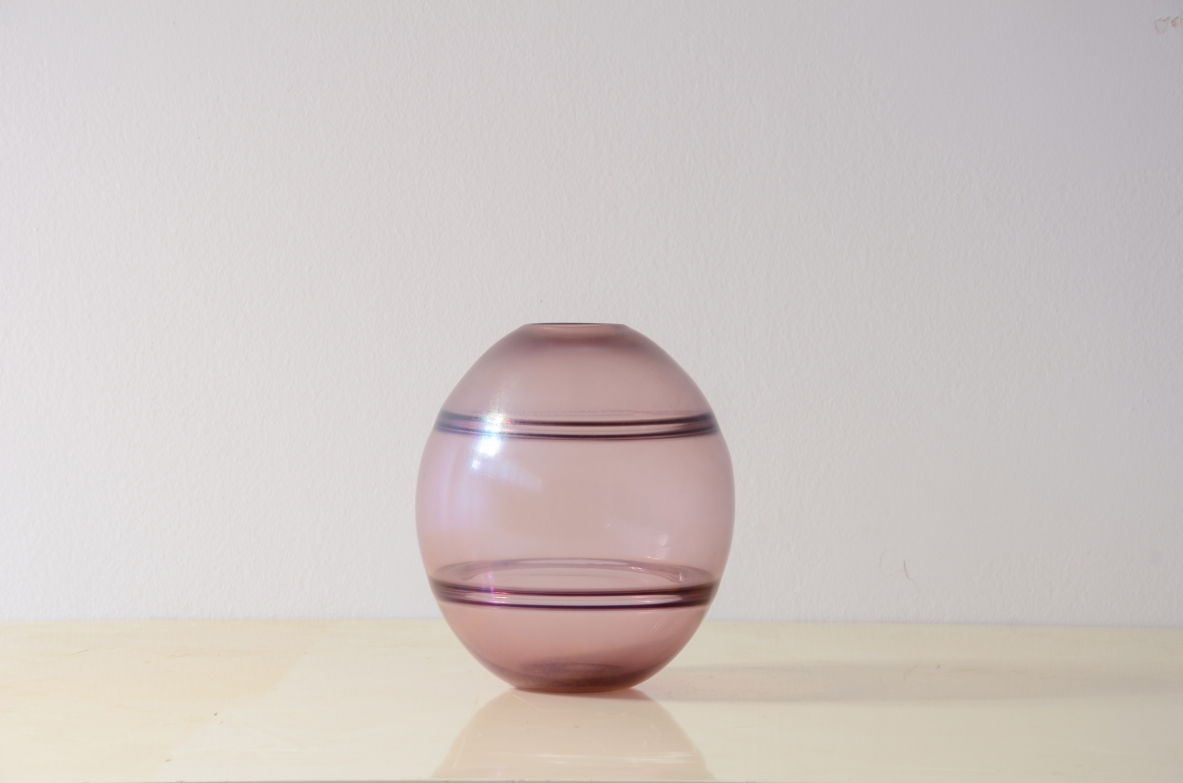
Alfredo Barbini
Incalmo vase composed of fused hemispheres, acid-treated amethyst.
Murano, circa 1960
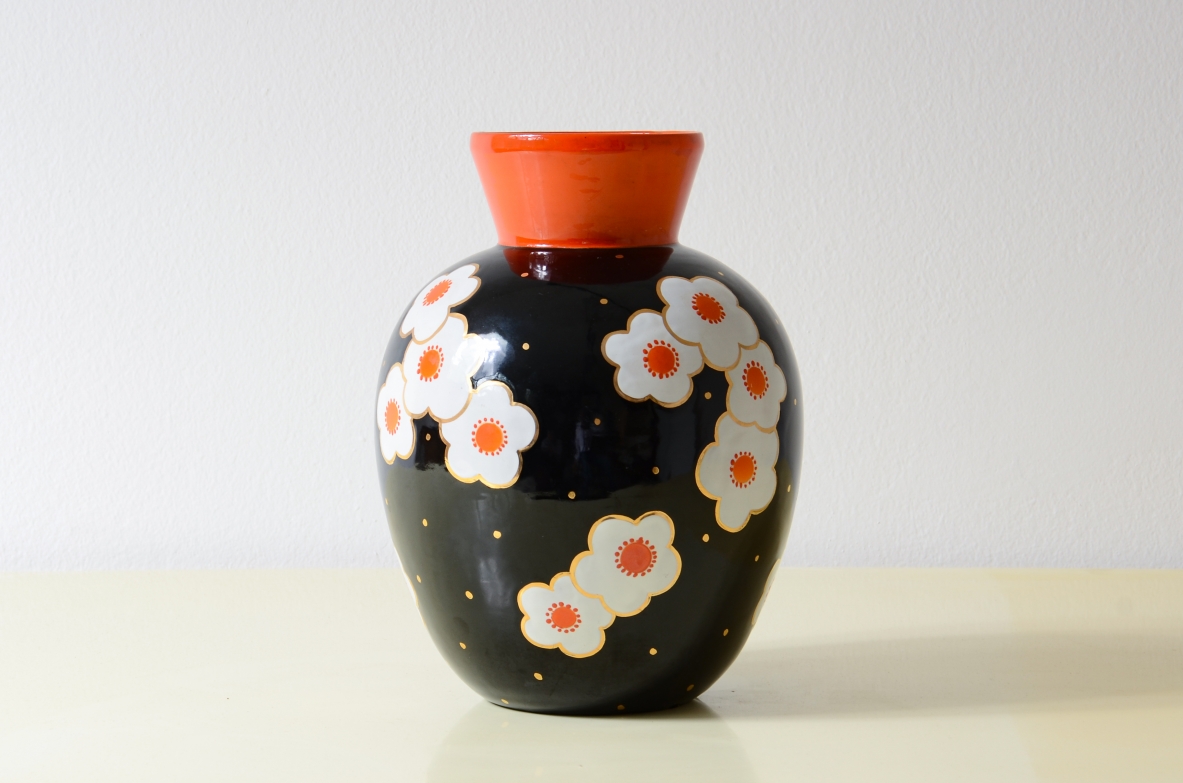
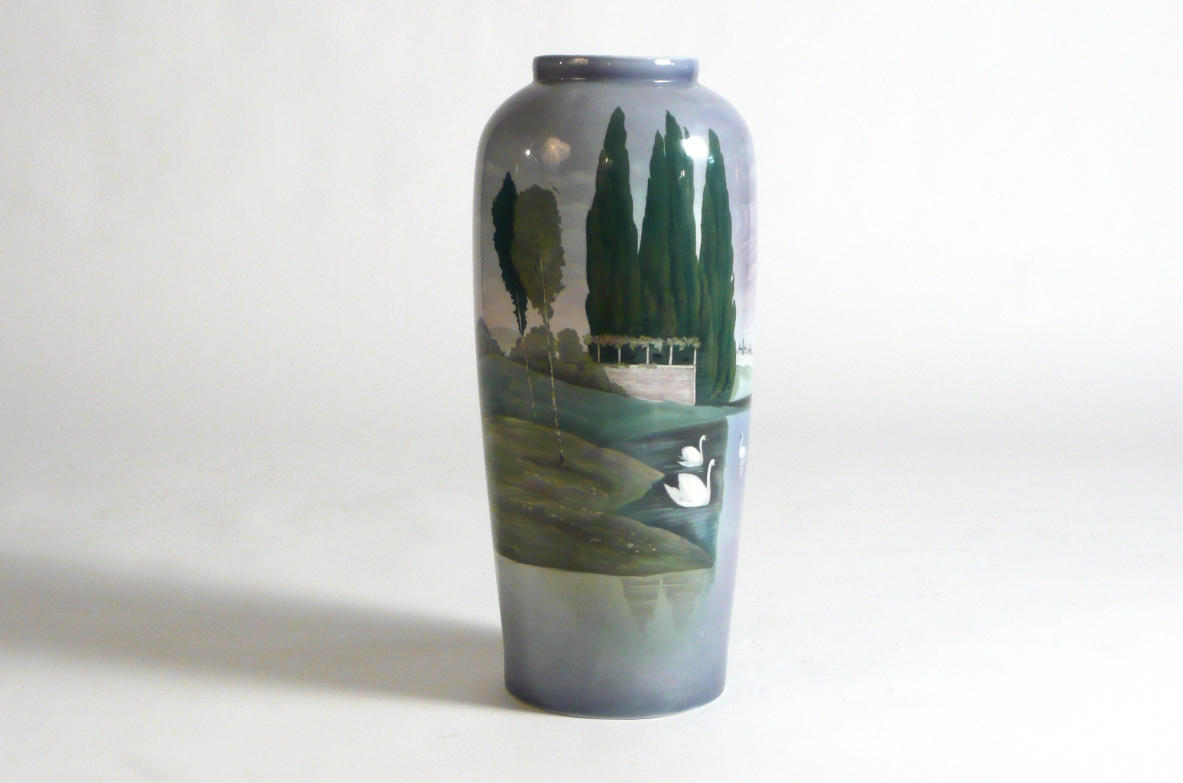
Large polychrome ceramic vase with painted floral decoration on a black background.
"Perugia" manufactory, circa 1940.
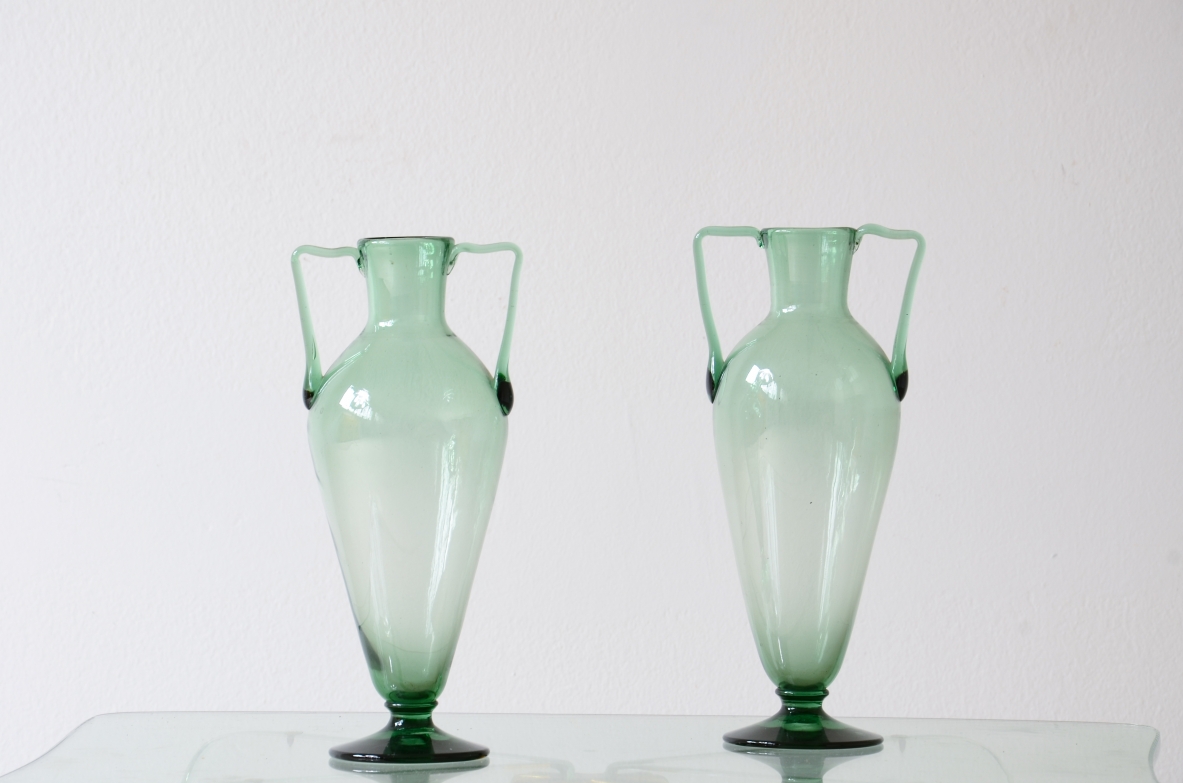
Pair of blown glass vases with colored glass applications.
Manufacturing ca. 1980.
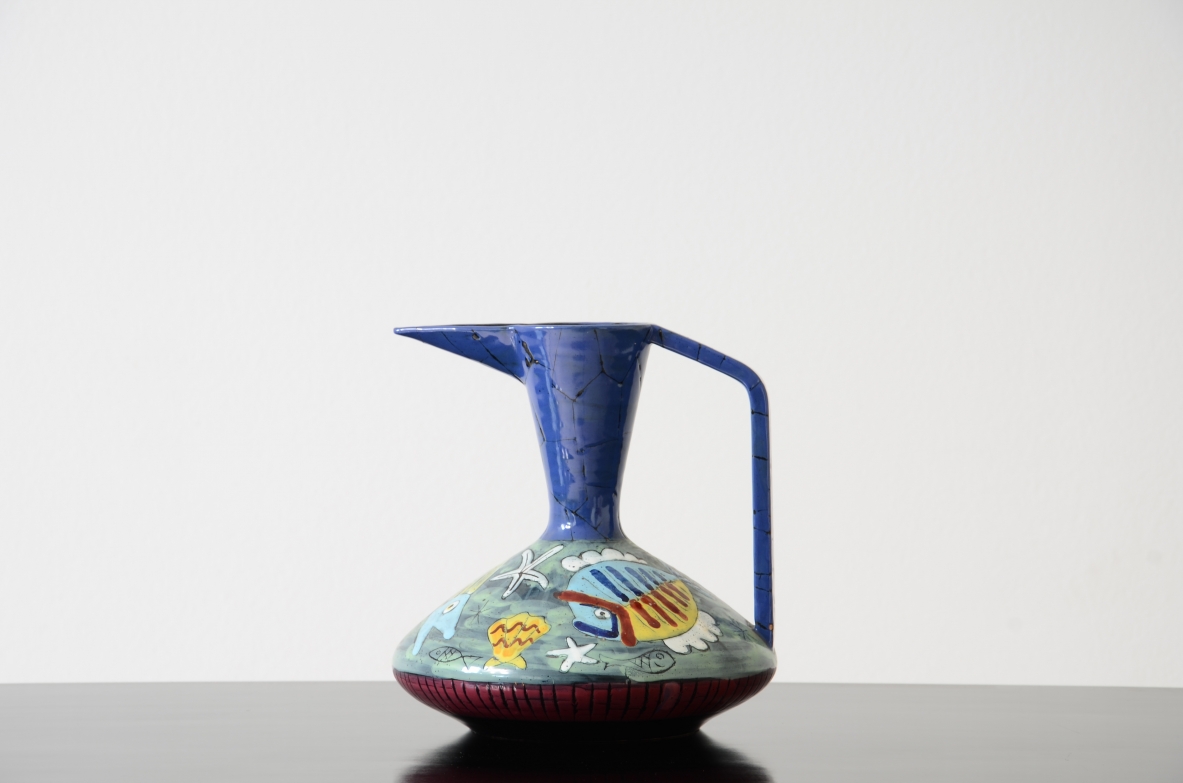
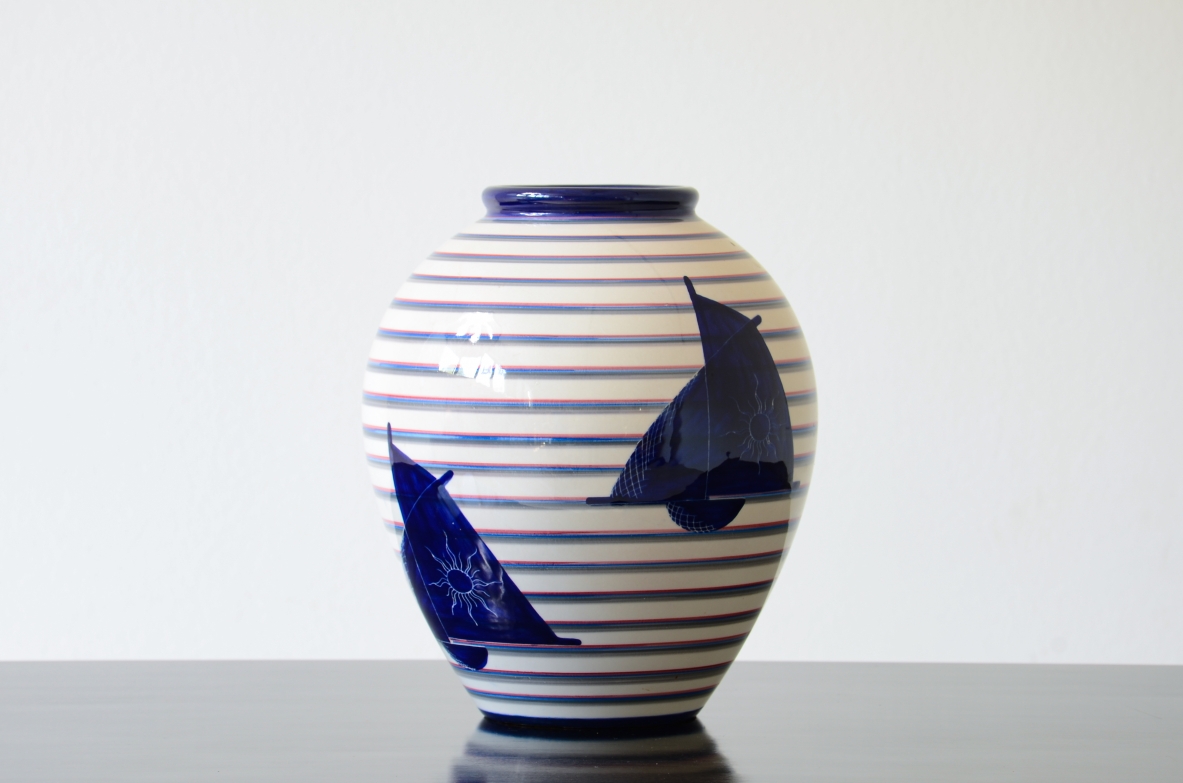
Rare painted and glazed ceramic. "The Bottom of the Sea"
UC.Ancora manufacturing, Venice 1950s.
Signed on the bottom.
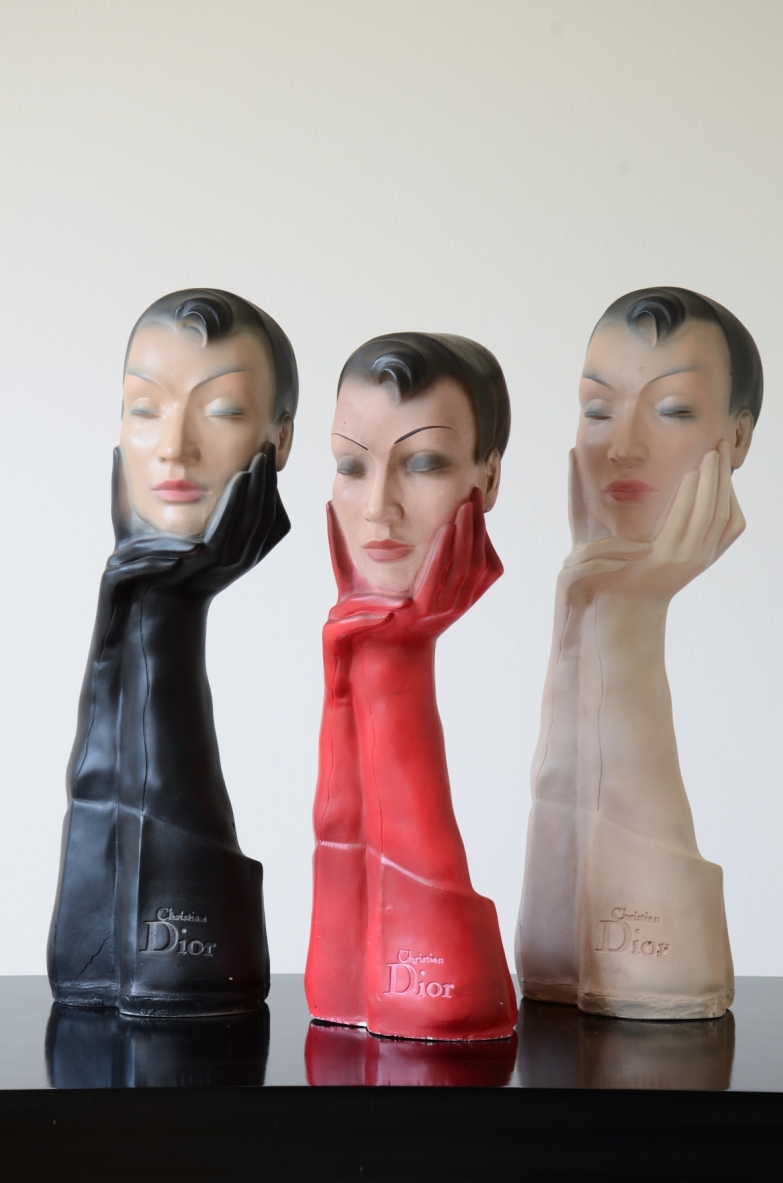
3 painted plaster advertising figures in excellent original condition.
Christian Dior, 1960s.
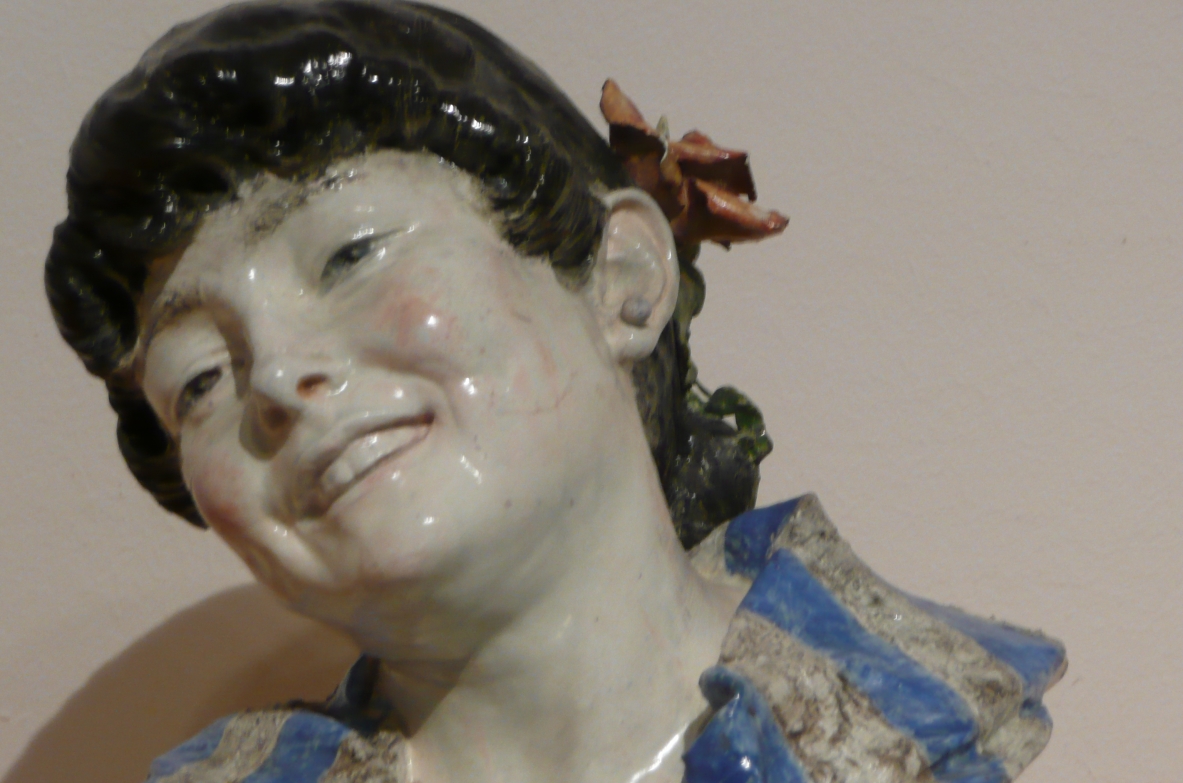
Painted ceramic figure of a young woman.
Francesco Parente, Florence 1940ca.
Signature on the back.
Pair of rare glazed ceramic bookends.
Manufactured in Perugia, Italy 1930s.
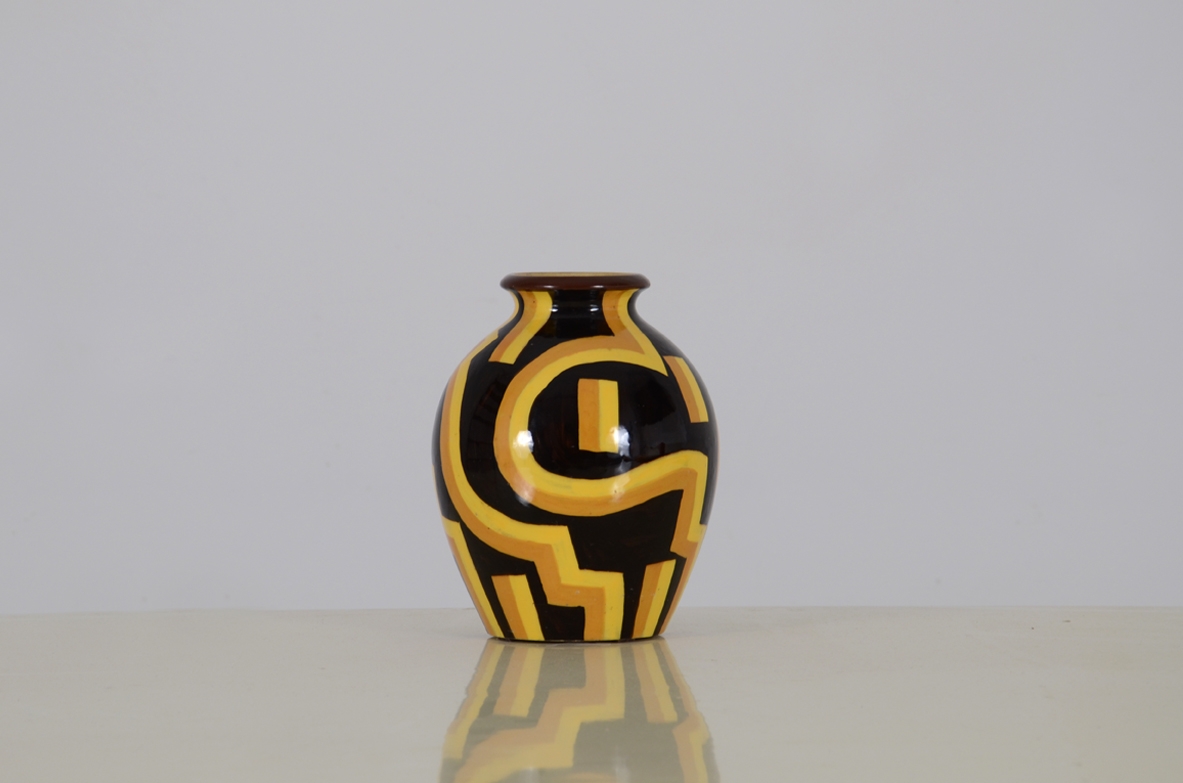
Hand-painted ceramic vase.
Rometti Umbertide ceramics 1928/30
Design by Corrado Cagli and Dante Baldelli, signature engraved under the base.
Michael Powolny (1871–1954)
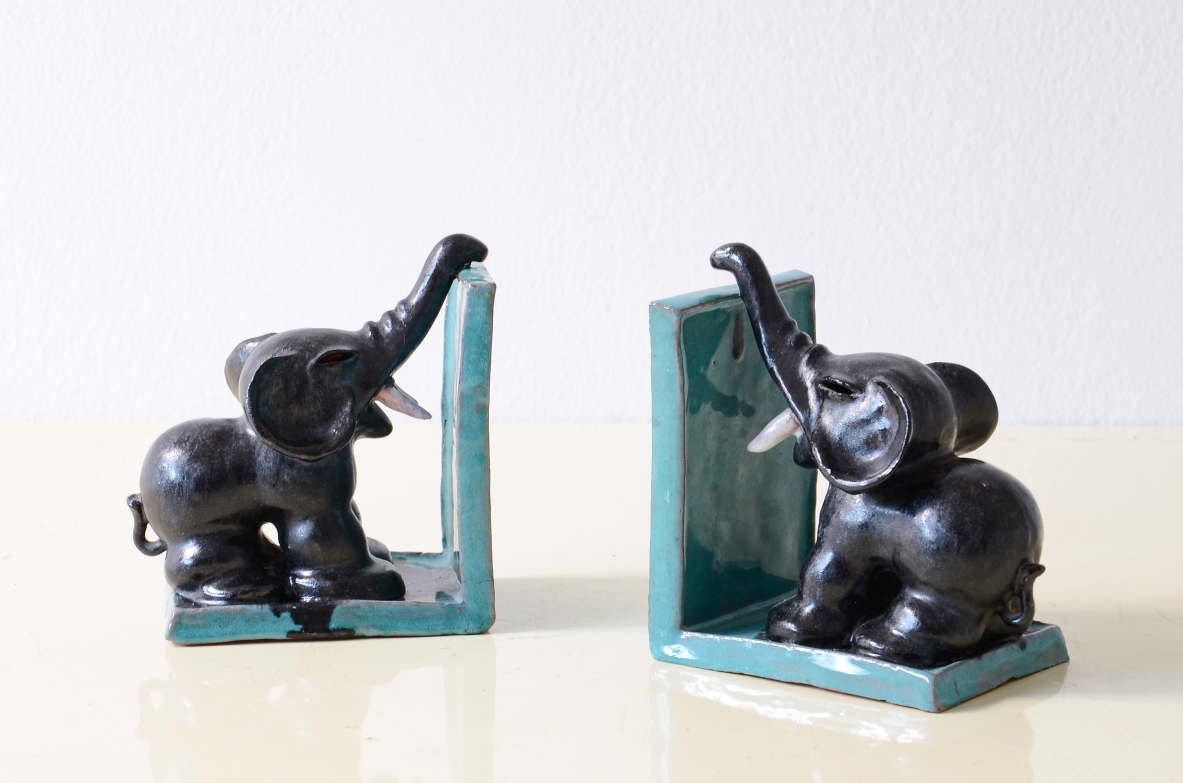
Two glazed ceramic elephant bookends.
Wiener Keramik, ca. 1920.
Michael Powolny was one of the most important Austrian ceramists and sculptors of the early 20th century. Trained at the Vienna School of Applied Arts, he was a central figure in the famous Wiener Werkstätte, helping shape the decorative language of Viennese modernism. Today, Powolny is recognized as one of the great innovators of 20th-century European design and ceramics, highly sought after by collectors and museums.
Bruno Gambone (Vietri sul mare 1936)
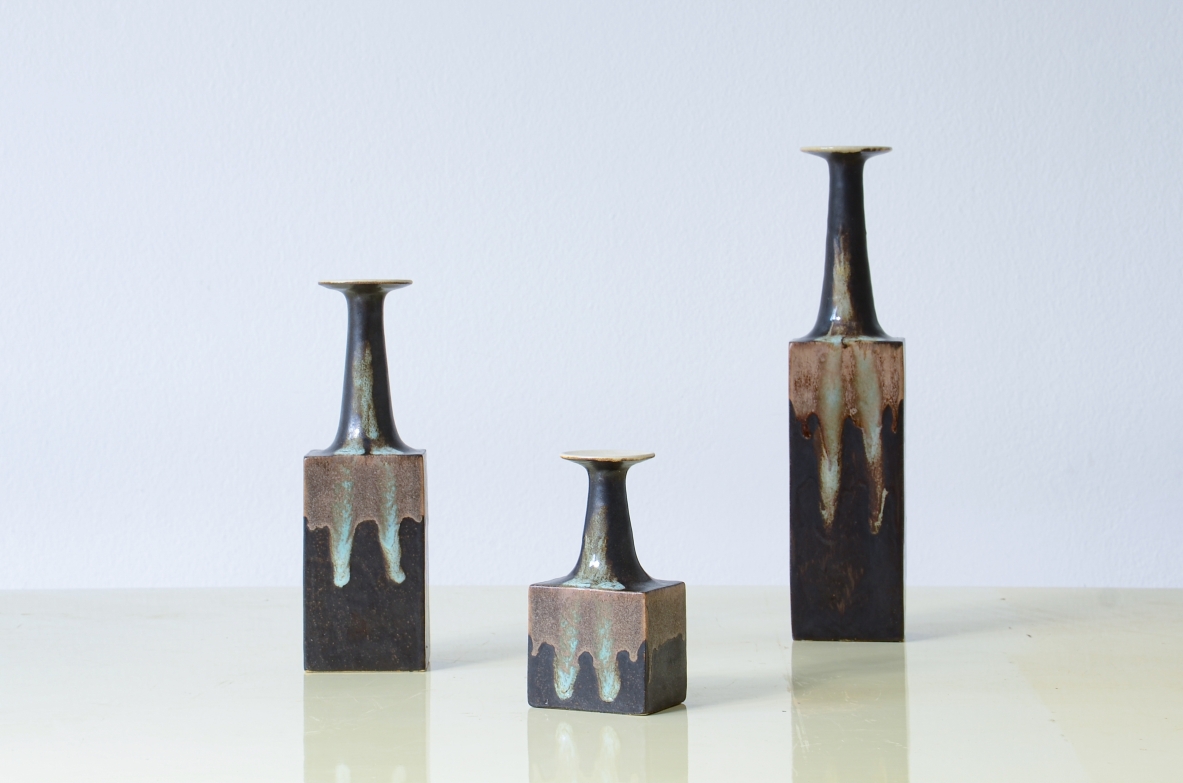
Set of ceramic bottle vases.
Vietri manufacture around 1970.
Rometti pottery
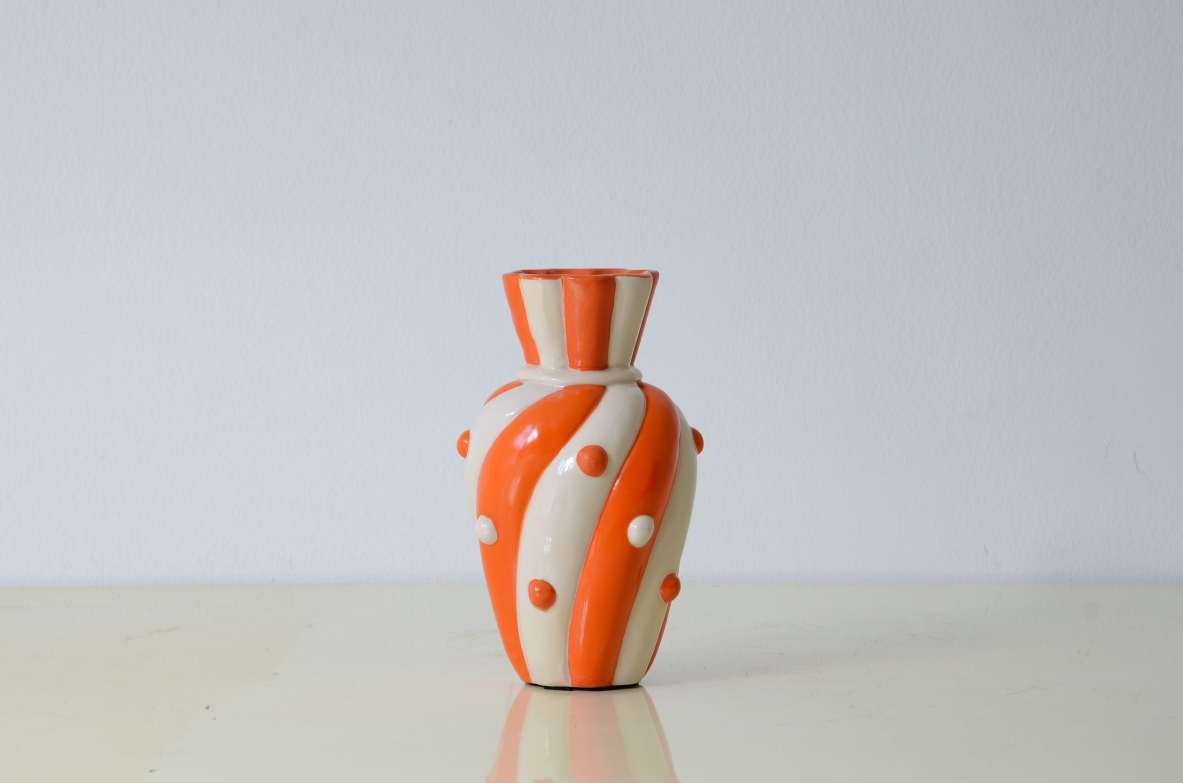
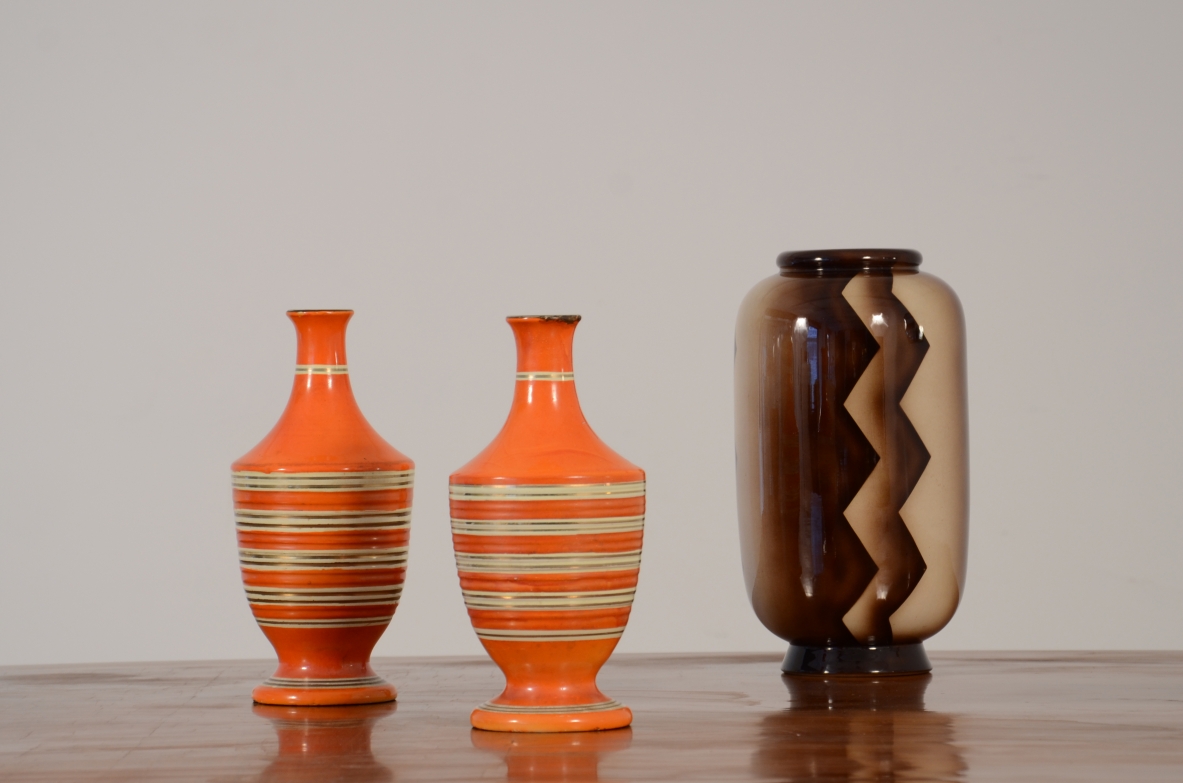
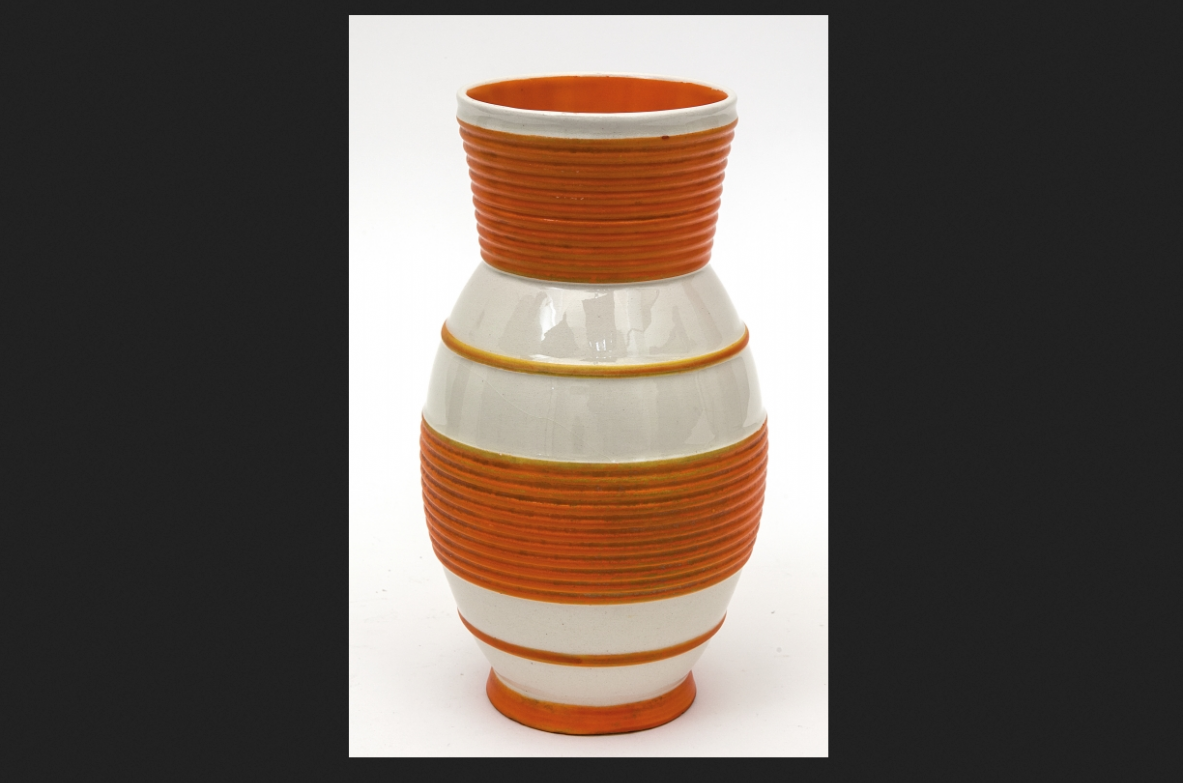
Round vase with leaves decoration on a coral colored background. Umbertide manufacture, 1930's.
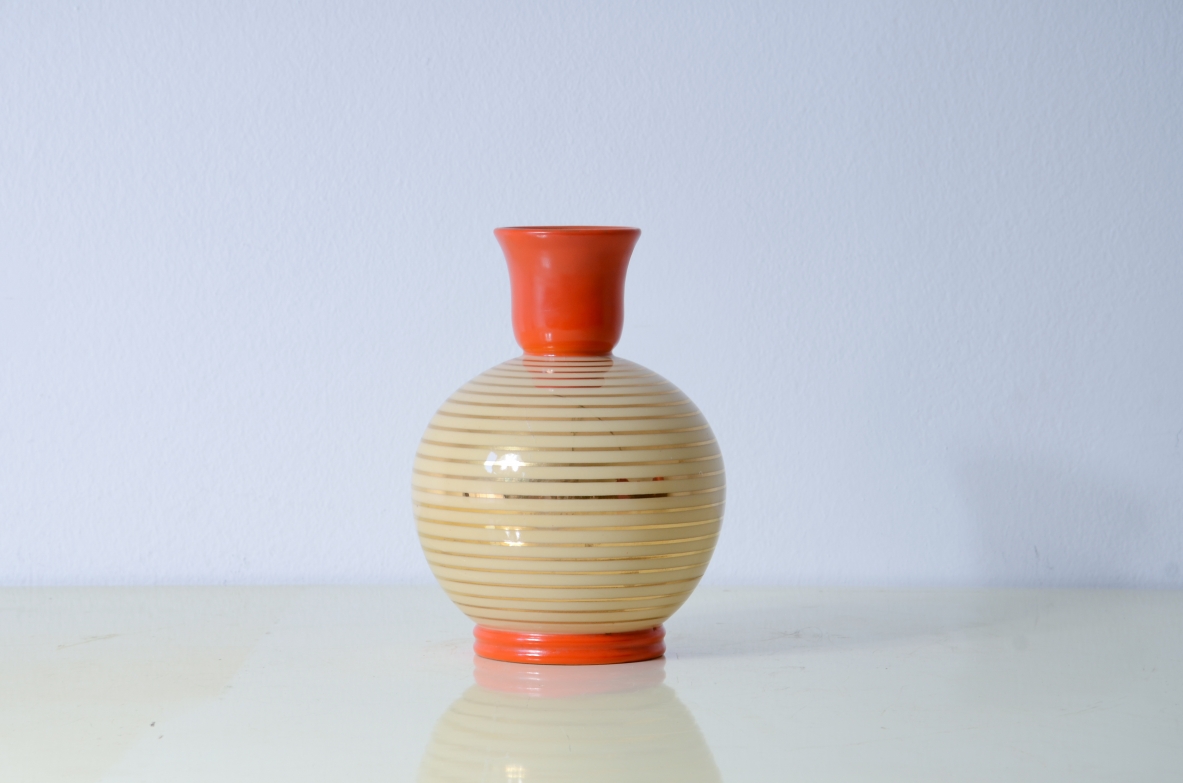
Vase with golden spinning. Umbertide manufacture around 1940.
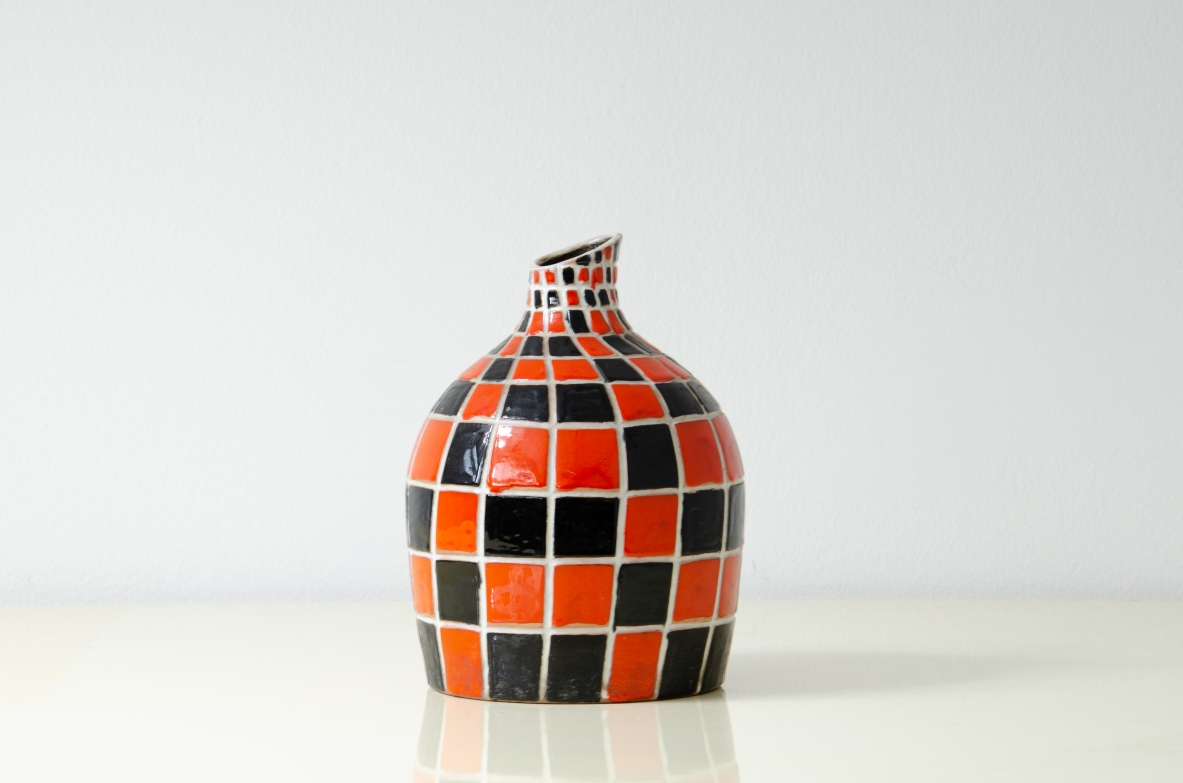
Vase finished in majolica with geometric decoration. Umbertide manufacture 1940's.
Painted and glazed ceramic vase with long white ceramic stem.
Signed on bottom, "Alfa manufacture made in Italy", 1950s.
Rometti pottery Blue vase with decoration and large threaded opening. Umbertide manufacture 1940's
Rometti
Rare and beautiful vase with period style decoration. Umbertide manufacture, 1950's
Vase decorated with flowers. Umbertide manufacture, around 1930.
Painted and glazed ceramic.
Signed on bottom, Giovanni Scipioni, 1960s.
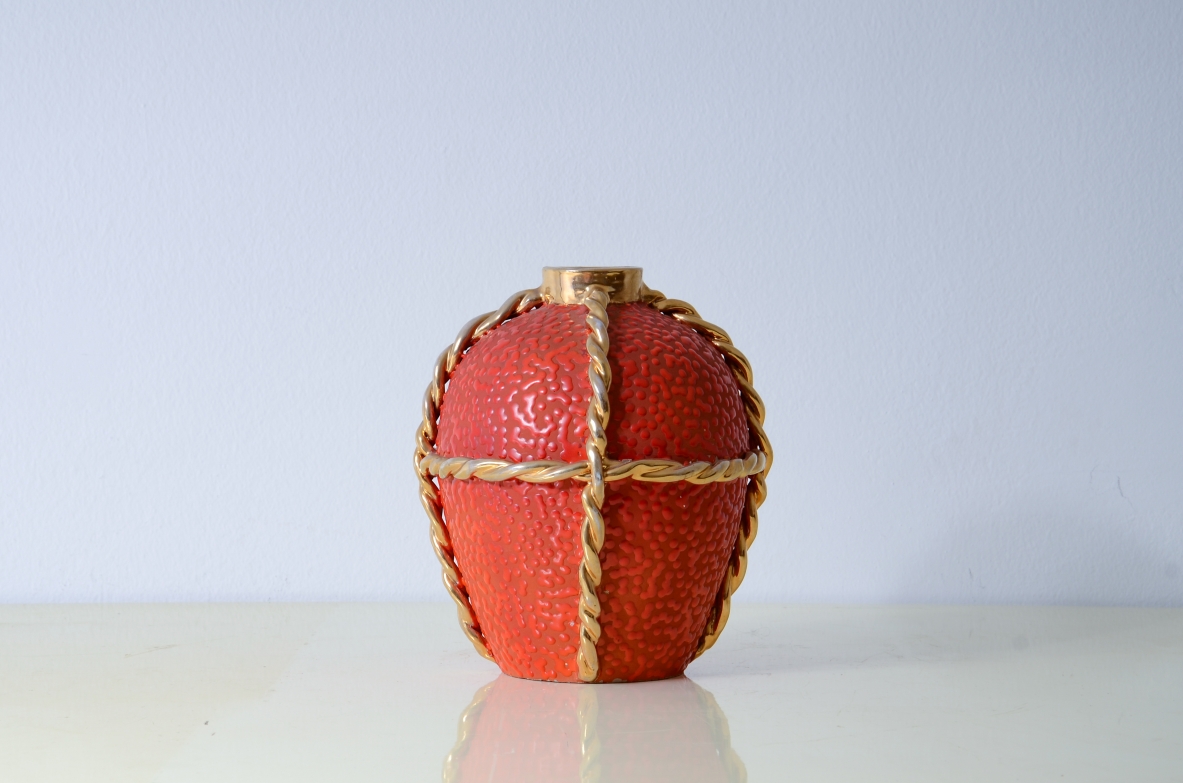
Spiked vase with golden rope decoration. Umbertide manufacture, around 1950.
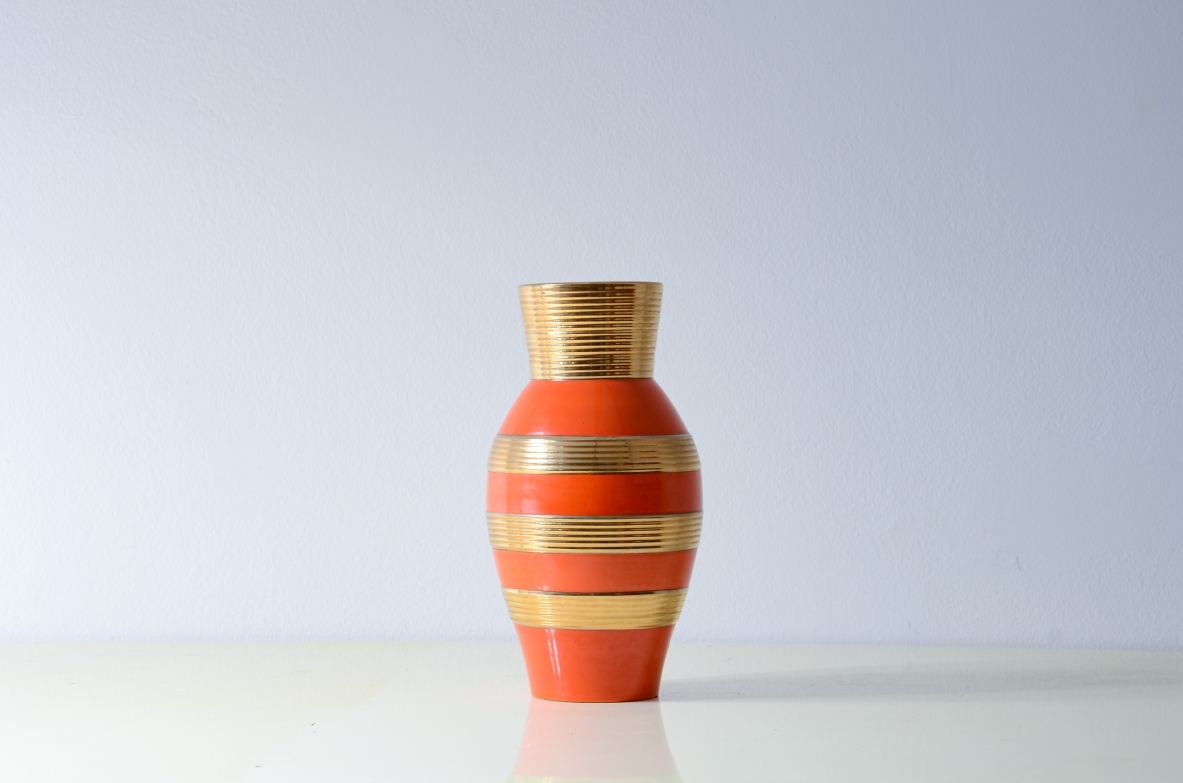
Large ceramic vase with gold spinning. Umbertide manufacture 1950's.
Vase with gold luster decoration. Umbertide manufacture, around 1950.
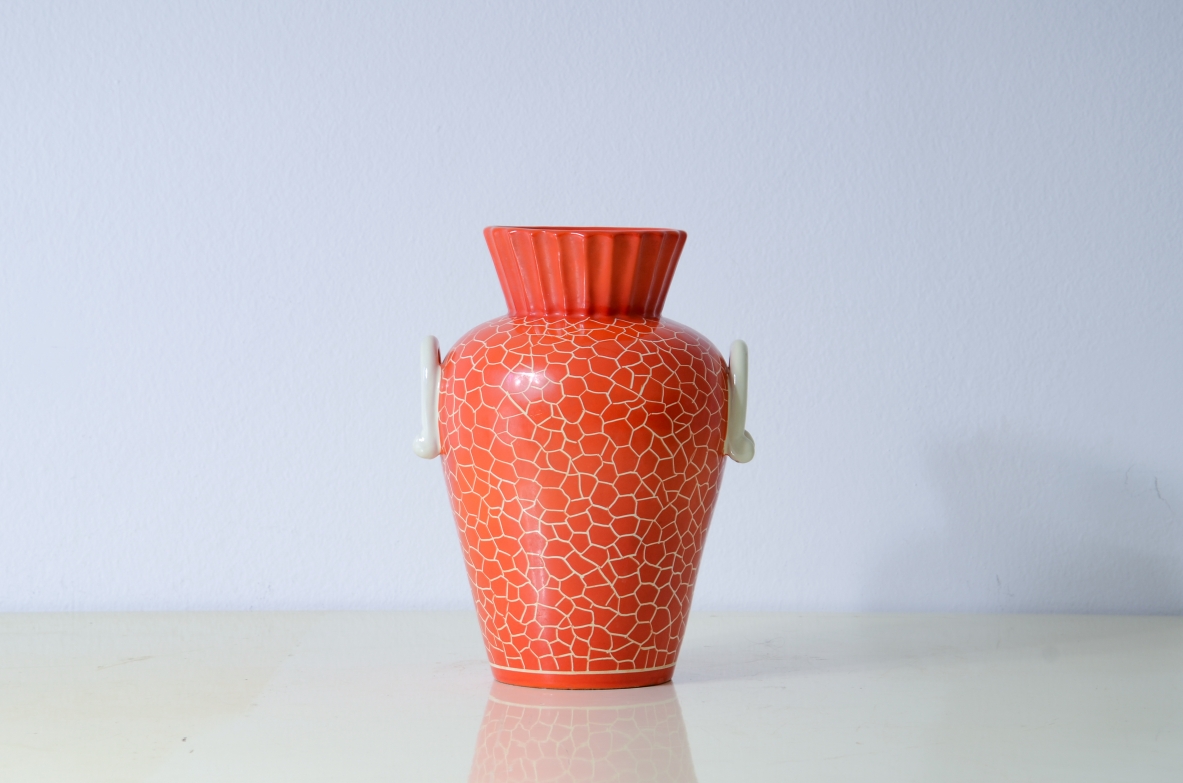
Large ceramic vase with white spinning. Umbertide manufacture 1950's.
Paolo Crepax
2 Murano glass vases in shades of blue and gray, one of which with a hand-ground base. Both made by the famous master glassmaker.
Murano manufacture around 1980.
Pair of large vases in colored burnished glass.
Italian manufacture, Murano
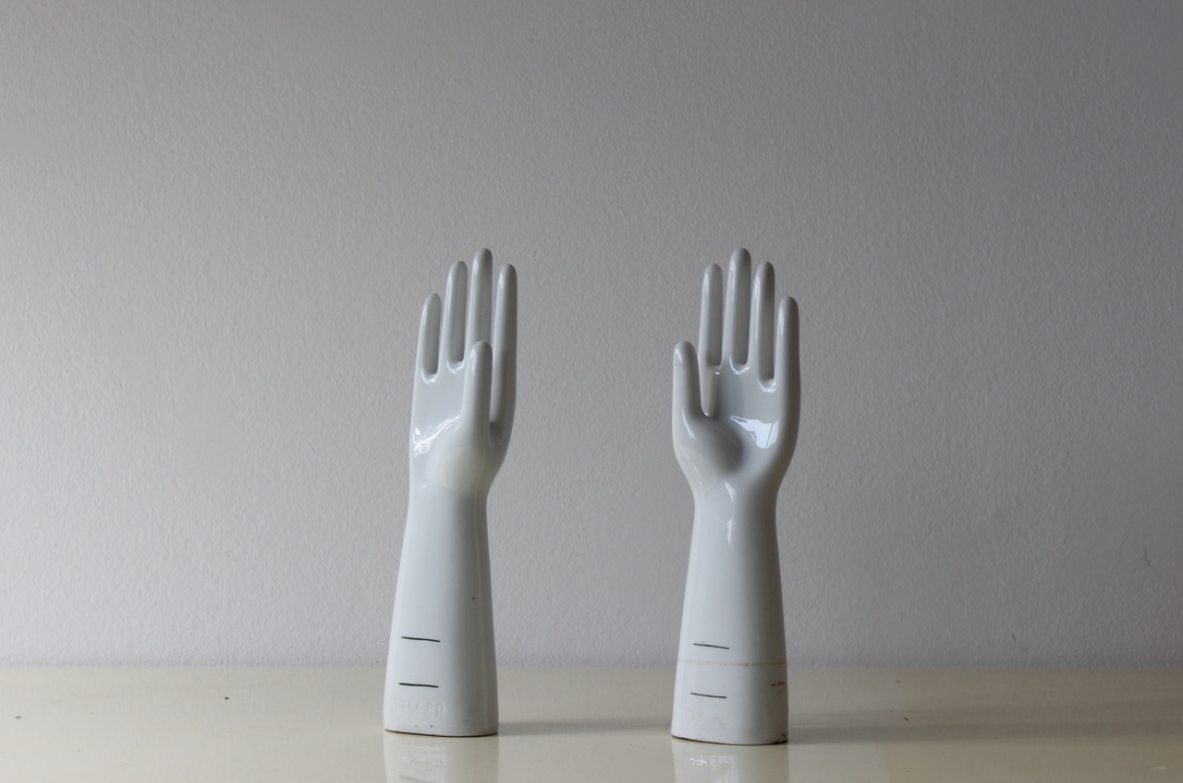
Pair of ceramic hands which inspired Gio Ponti for his famous hands later produced by Richard Ginori.
Rosenthal manufacture, 1920s/30s.
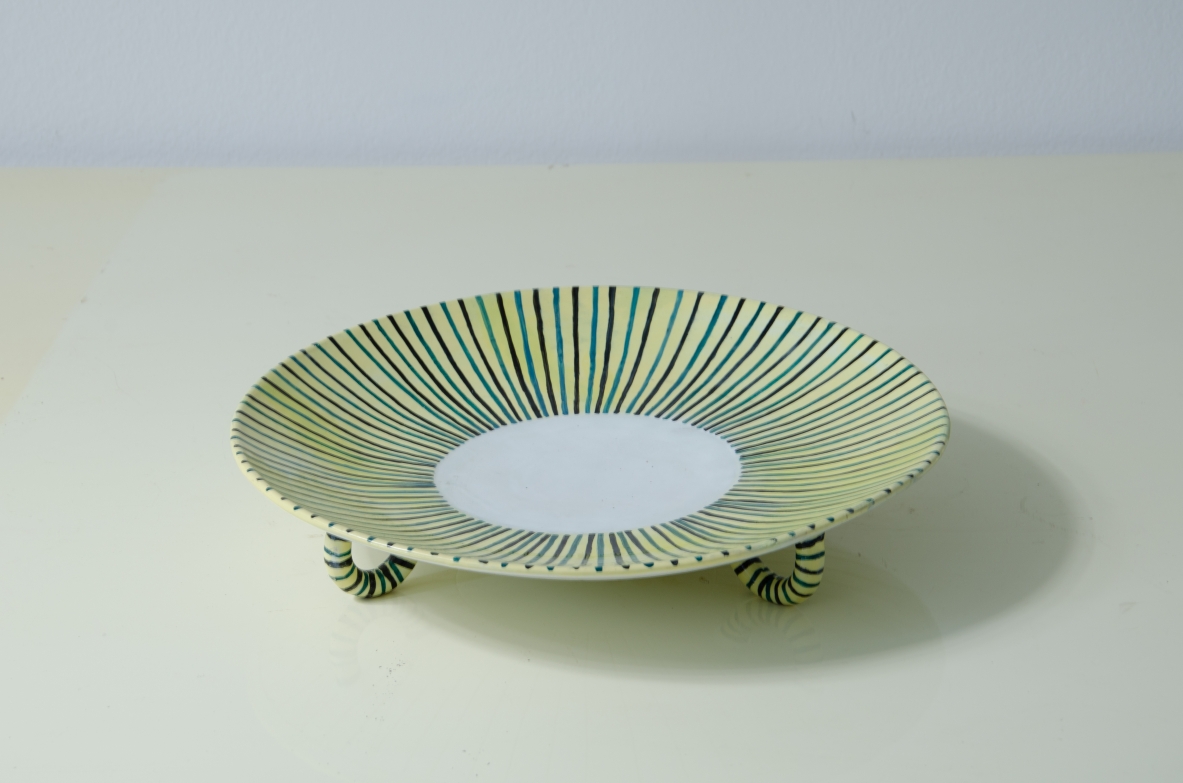
Rare centerpiece plate in painted ceramic.
San Polo Venice, 1950s.
Venini
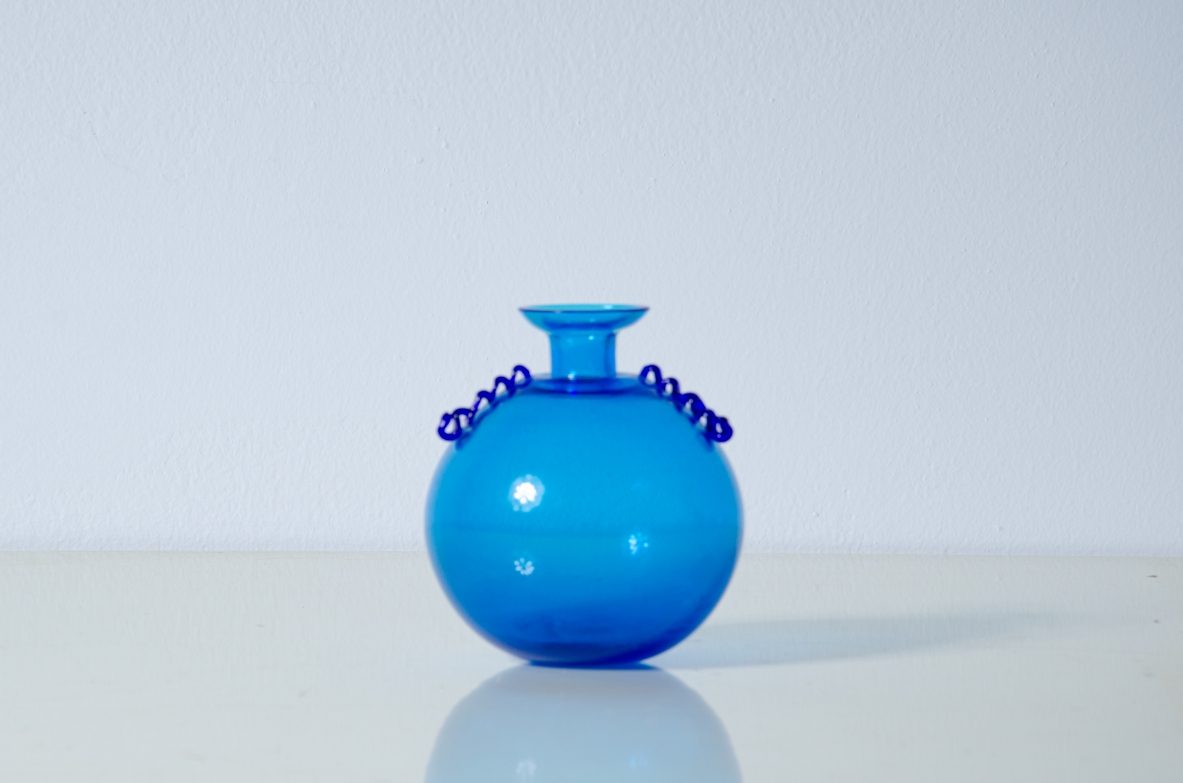
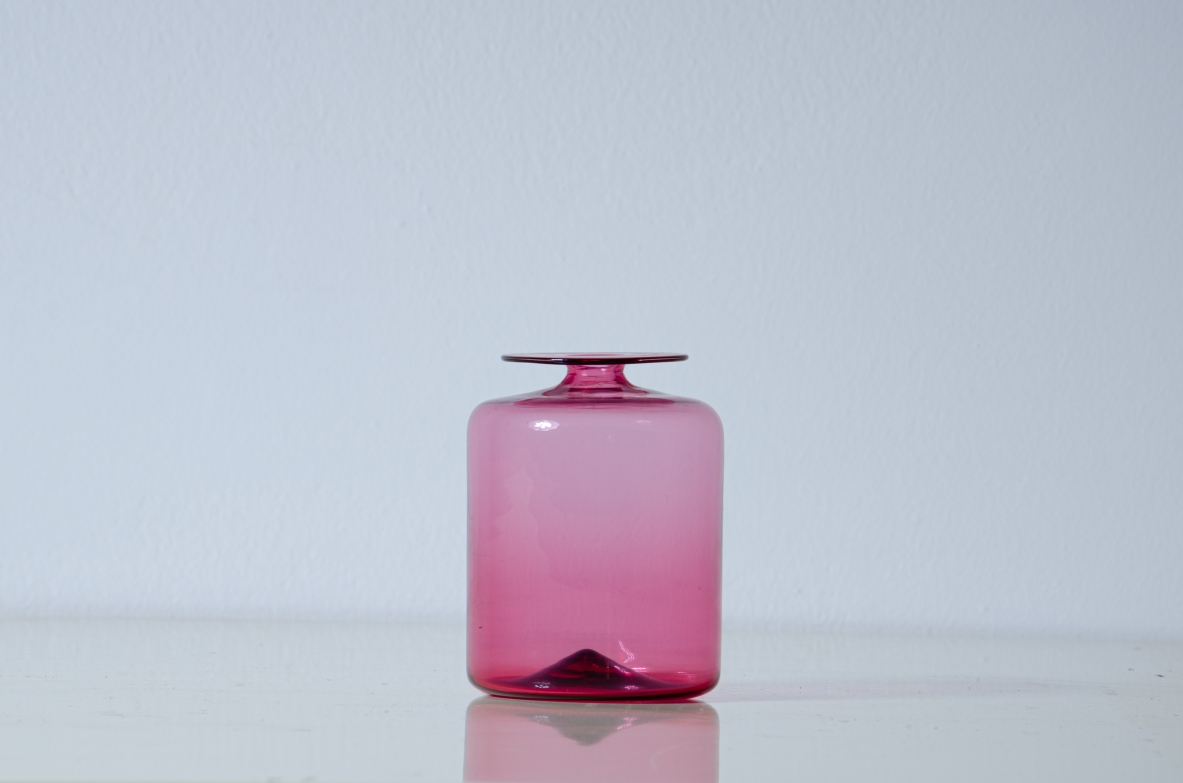
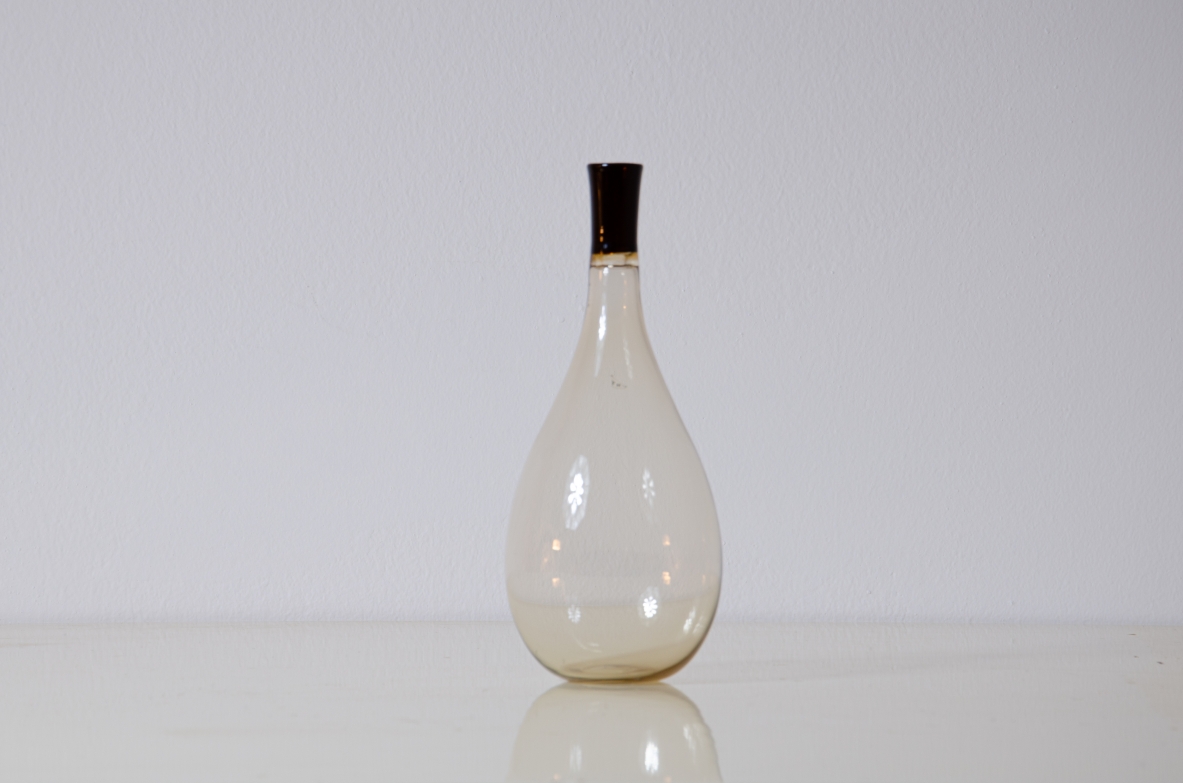
Blown glass vase.
Venini Murano manufacture, around 1930.
Colored ceramic vase with braided rope motif at the base.
France, 1930s.
Vittorio Zechin
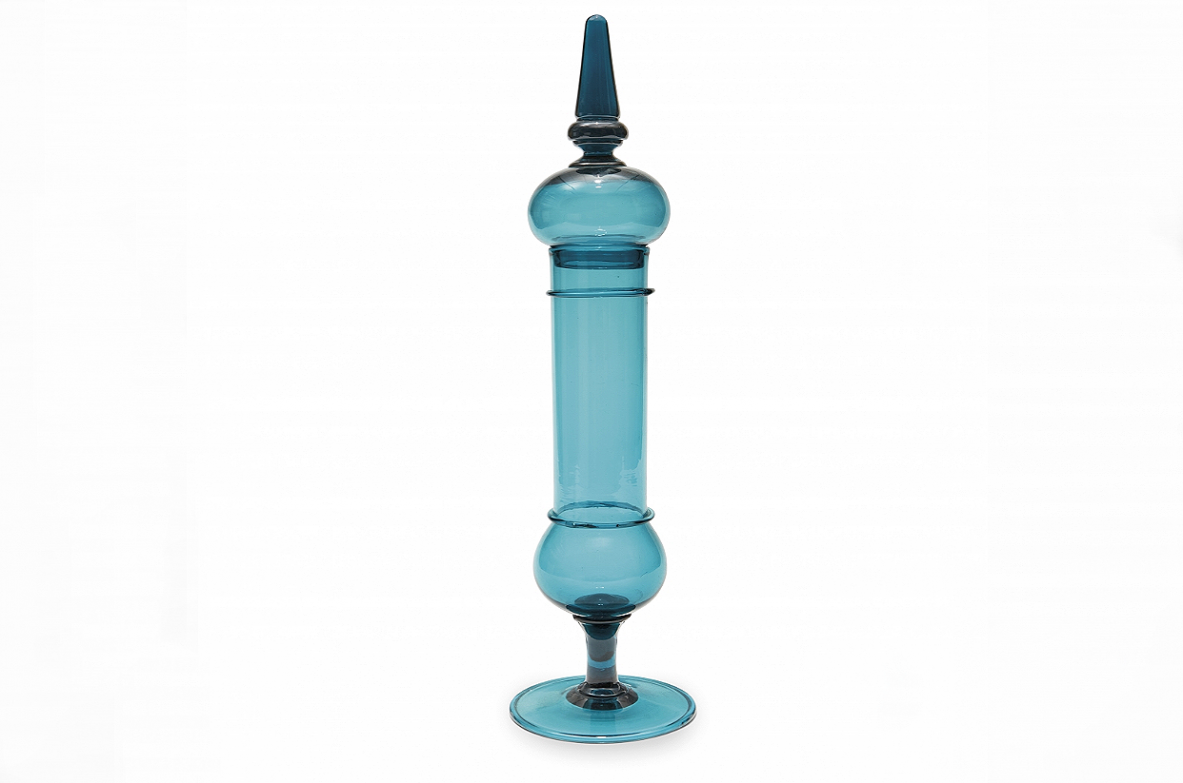
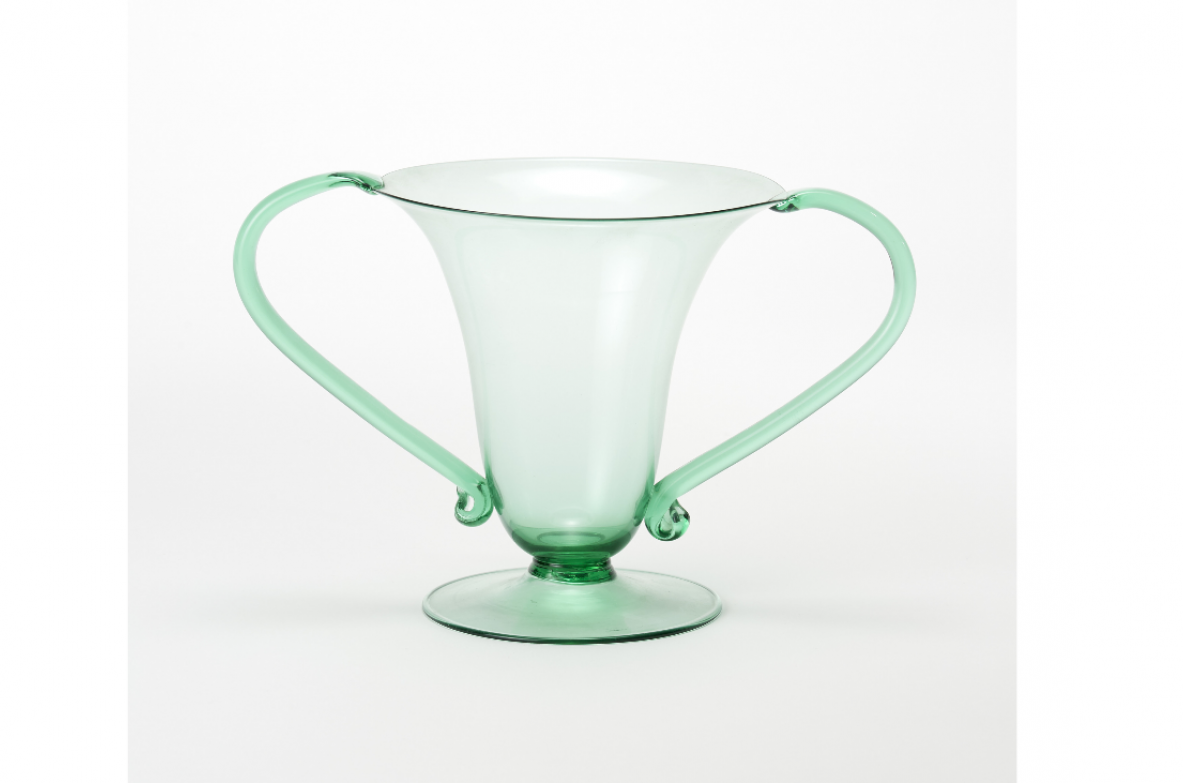
Goblet in aqua green blown glass.
Cappellin Manufacture, Murano 1926.
Acid signature under the base.
Giovanni Gariboldi
Rare colored ceramic vase with love knot.
Richard Ginori manufacture, 1940s.
Vase in turned and colored ceramic.
France 1930ca.
Colored ceramic vase.
Prod. Galvani, Pordenone, Italy 1960s.
Pair of colored ceramic vases.
France 1960s.
Salviati Venezia, lattimo glass vase in a light pink color with gold leaf powder.
Salviati & C, Murano 1970s.
In 1859, the Vicenza lawyer Antonio Salviati began his glass business by founding Salviati & C. It combines the production of mosaics and enamels with that of blown glass, becoming an example of international excellence.
Gio Ponti, small ceramic vase.
Prod. Richard Ginori, 1930s.
Seguso Murano, small blown glass vase.
Signed Seguso Murano.
Seguso Vetri d'Arte was born in Murano in 1375 as one of the oldest Venetian glass factories. The Seguso family today boasts the 23rd generation of glass masters.
De Majo Murano, small blown glass vase model 9731.
Signed De Majo Murano 1989.
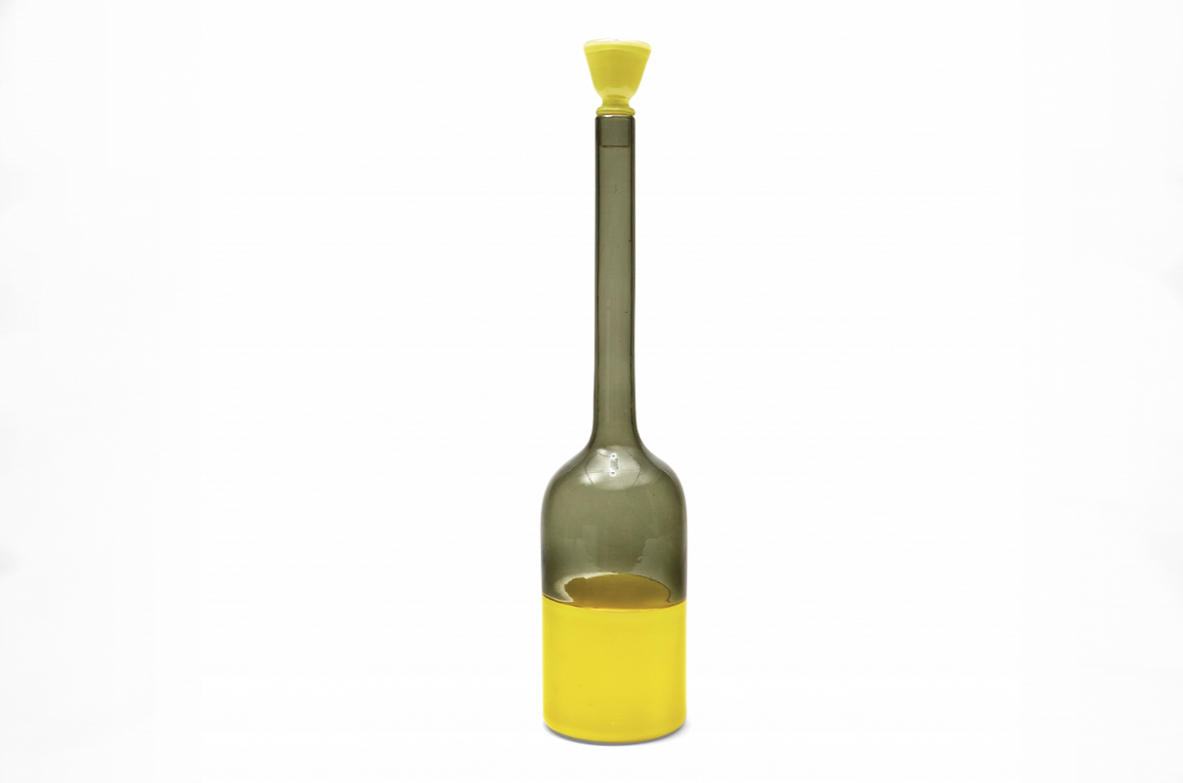
Ludovico Diaz de Santillana, blown glass bottle with incalmo collar.
Prod. Venini, 1970s.
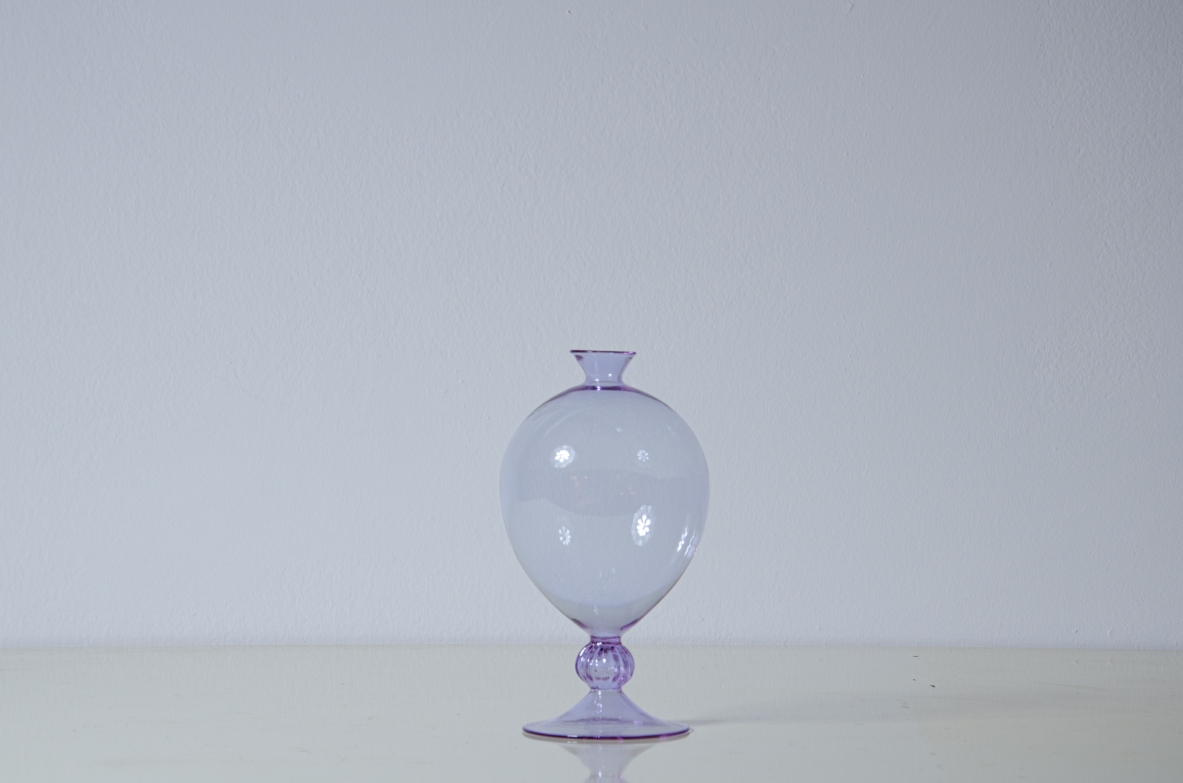
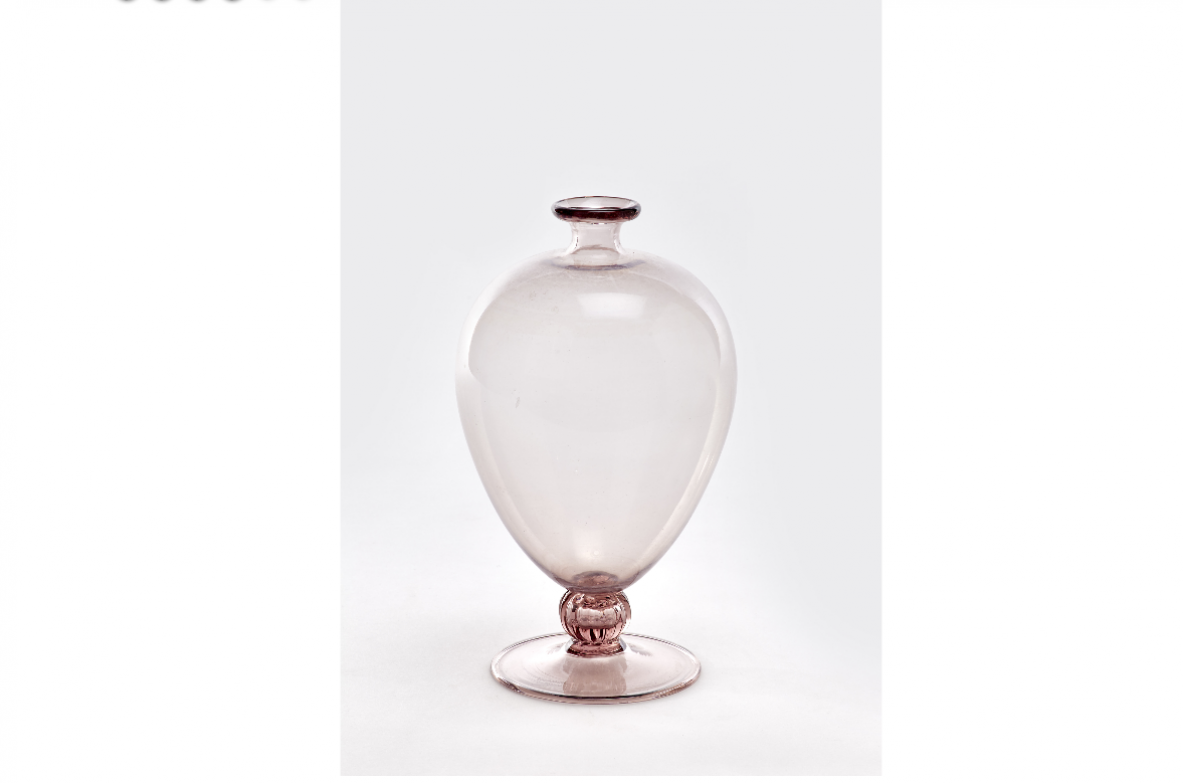
Vittorio Zecchin, Veronese vase in lilac-colored blown glass, Prod. Venini, Murano 1970s.
The vase takes its name from the canvas of "The Annunciation of the Virgin" by Paolo Veronese. The complex and rounded shape defies gravity, as in the painting that originally houses it.
Paolo Venini, very light blown glass, model 4740.
Signed, Venini 1959.
Painted ceramic vase.
Italian manufacture, 1970's.
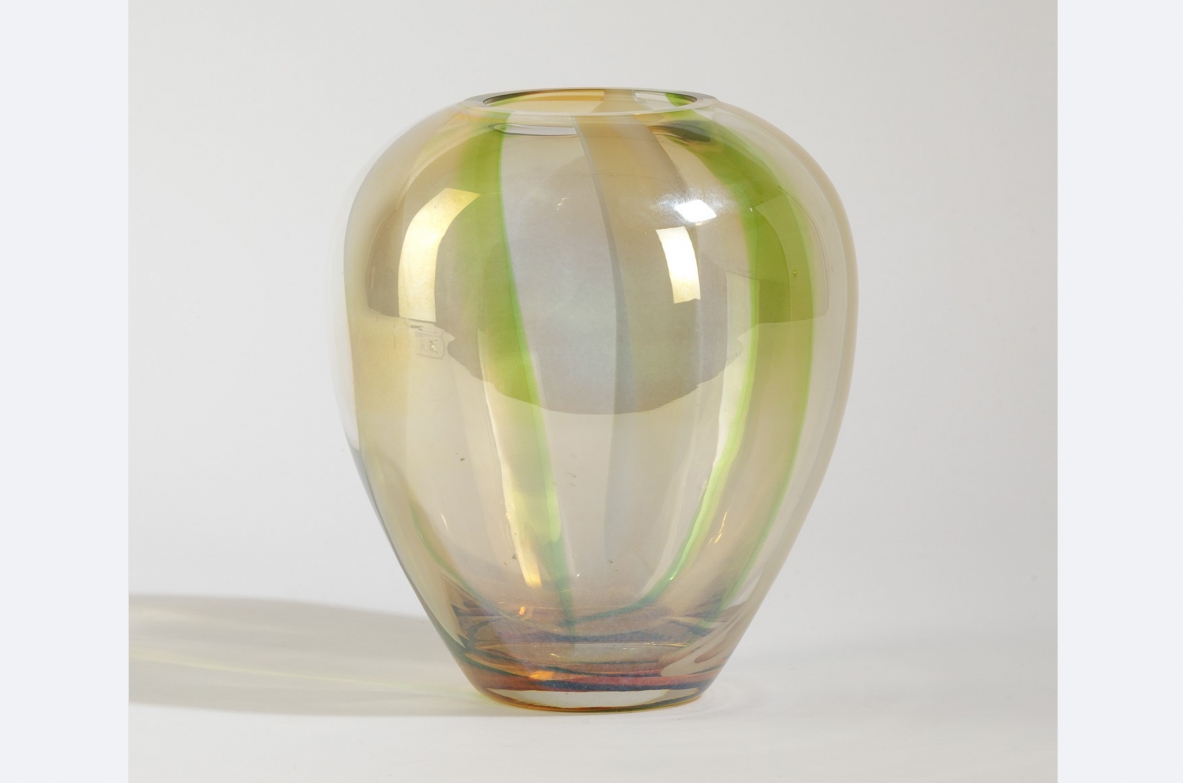
Murano, 20th century, egg-shaped vase in iridescent glass.
1950s.
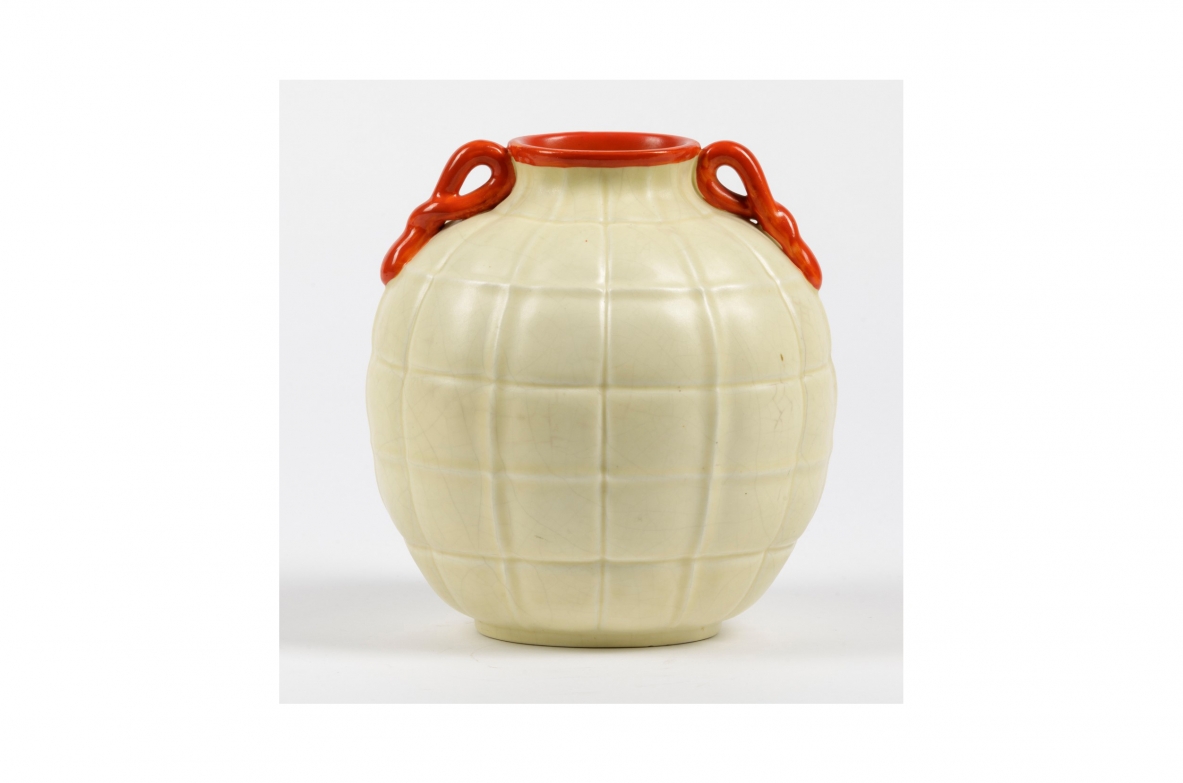
Gio Ponti Richard Ginori,
Oval vase in cast earthenware and matt enamel with handles and mouth in polychrome. Stamp of the manufacture. Prod. San Cristoforo, Milan, 1930's.
Art Deco ceramic vase with silver decorations.
French manufacture, 1930's.